NCERT Book for Class 11 Chemistry Part 2 – (Chapter 7 – Environmental Chemistry)

AI Exam Summary 2 min quick recap

Chapter 7 – Environmental Chemistry Environmental Chemistry focuses on the study of chemical processes occurring in the environment and their impact on living organisms.

  • It explains different types of pollution, including air, water, soil, and noise pollution, along with their sources and harmful effects.
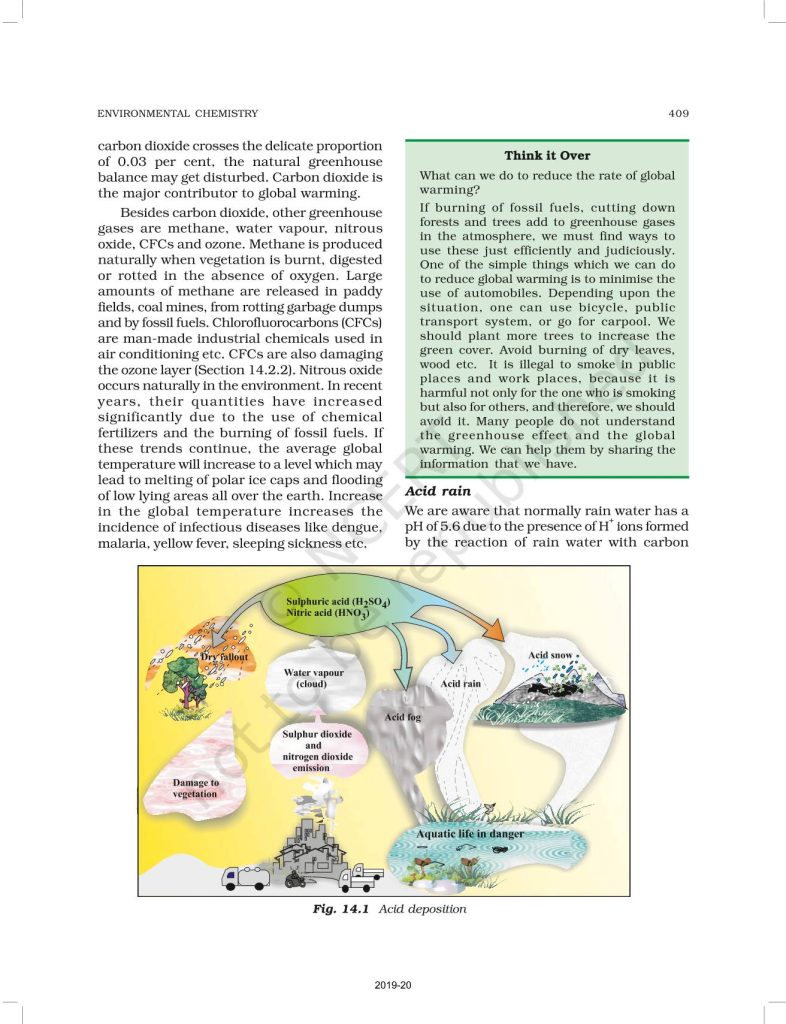
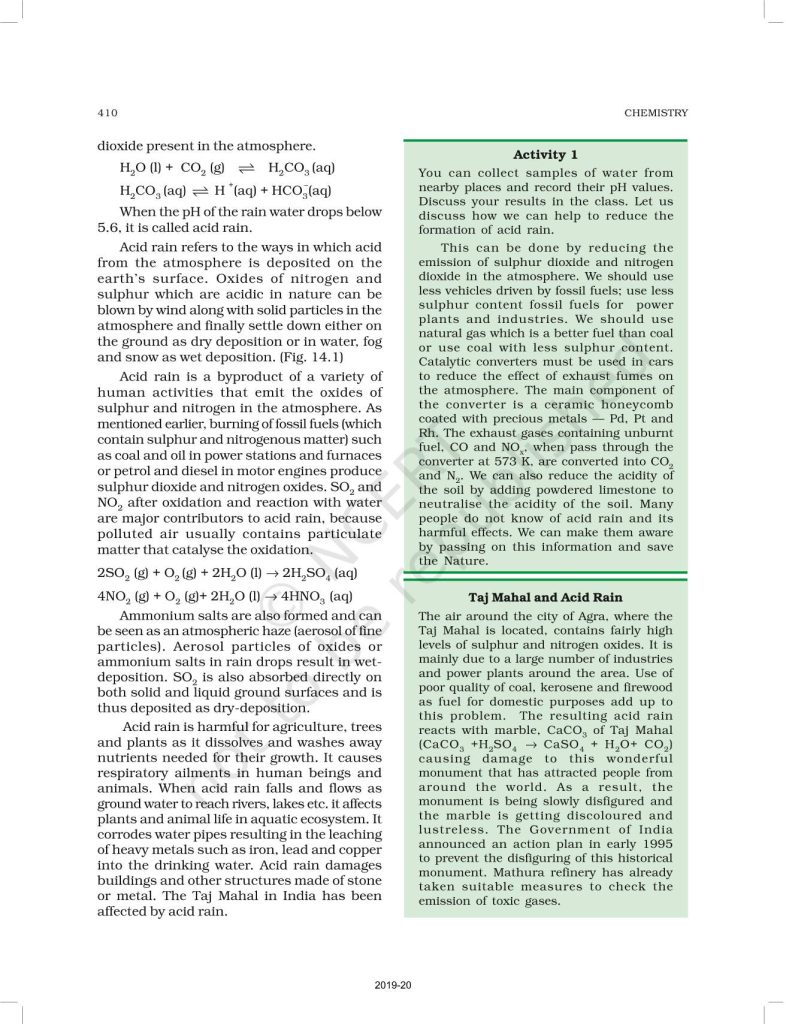
  • The chapter also discusses important topics such as the greenhouse effect, global warming, acid rain, ozone layer depletion, and methods of pollution control.
  • Understanding environmental chemistry helps students become aware of sustainable practices and environmental protection.
💡
High-Yield Topper Tip: Frequently tested in competitive exams. Focus on boundary conditions and conceptual exceptions.

Chapter 7 – Environmental Chemistry

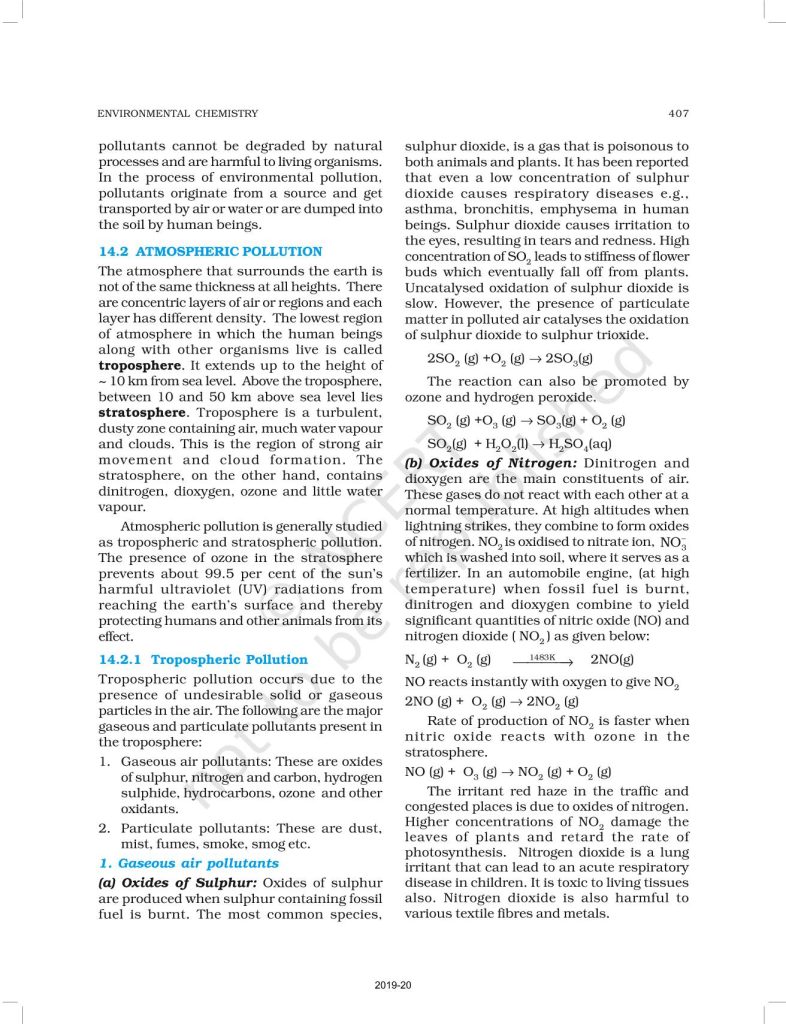
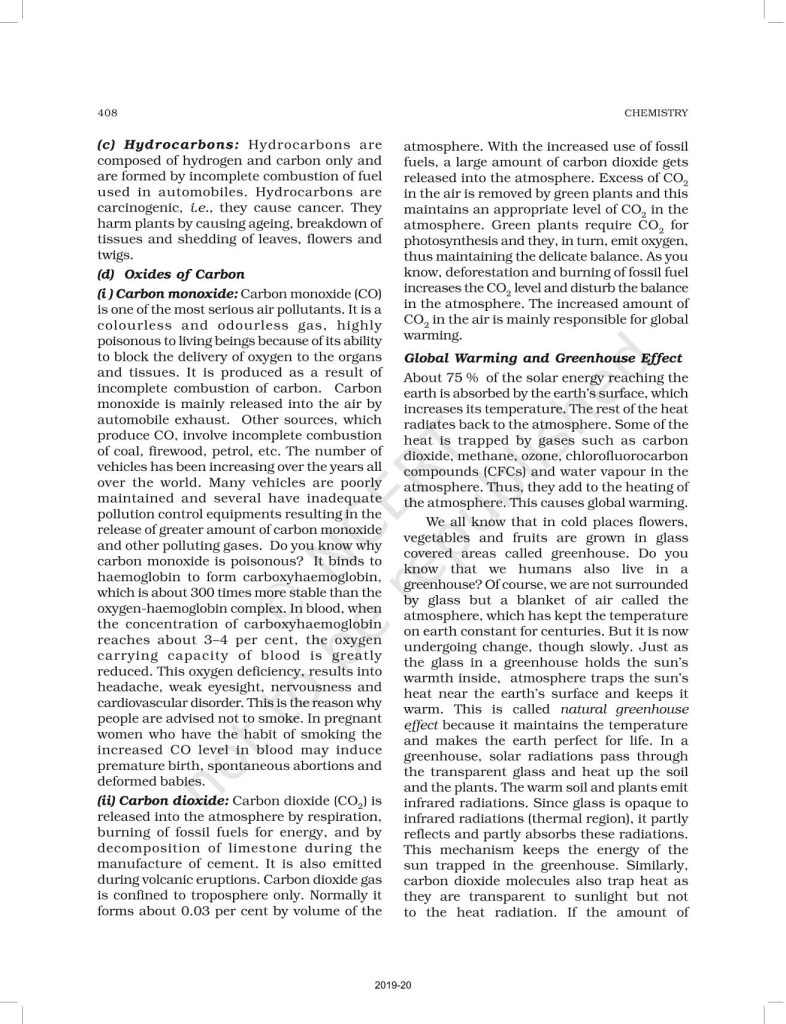
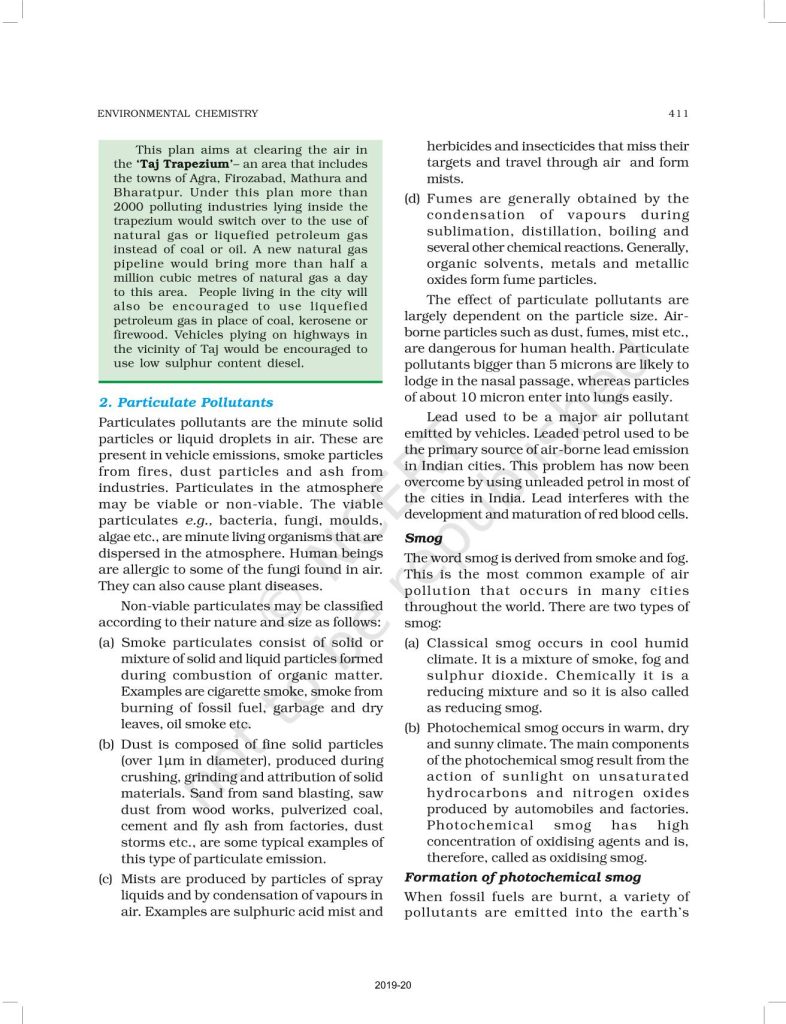
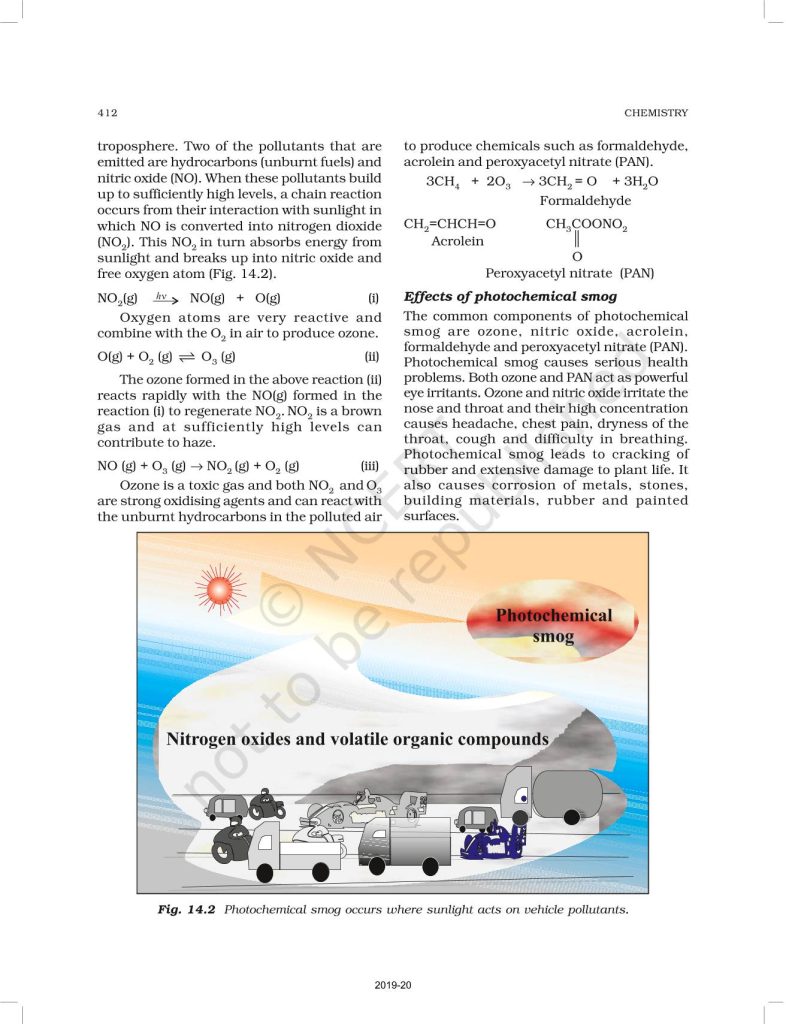
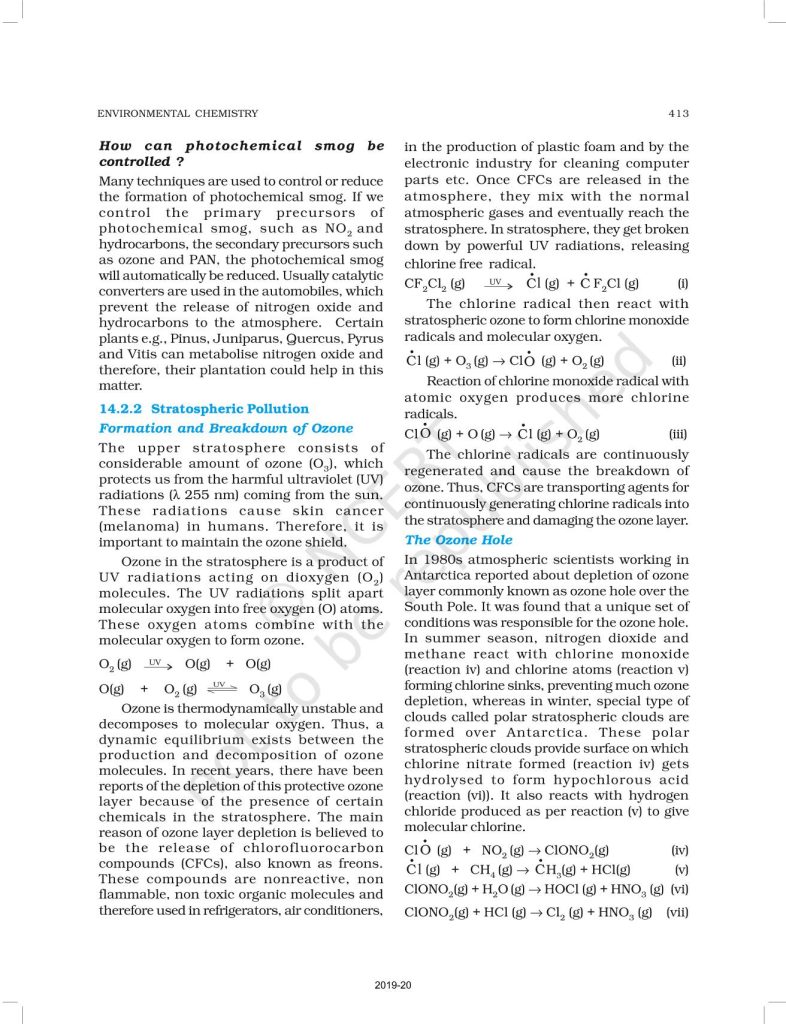
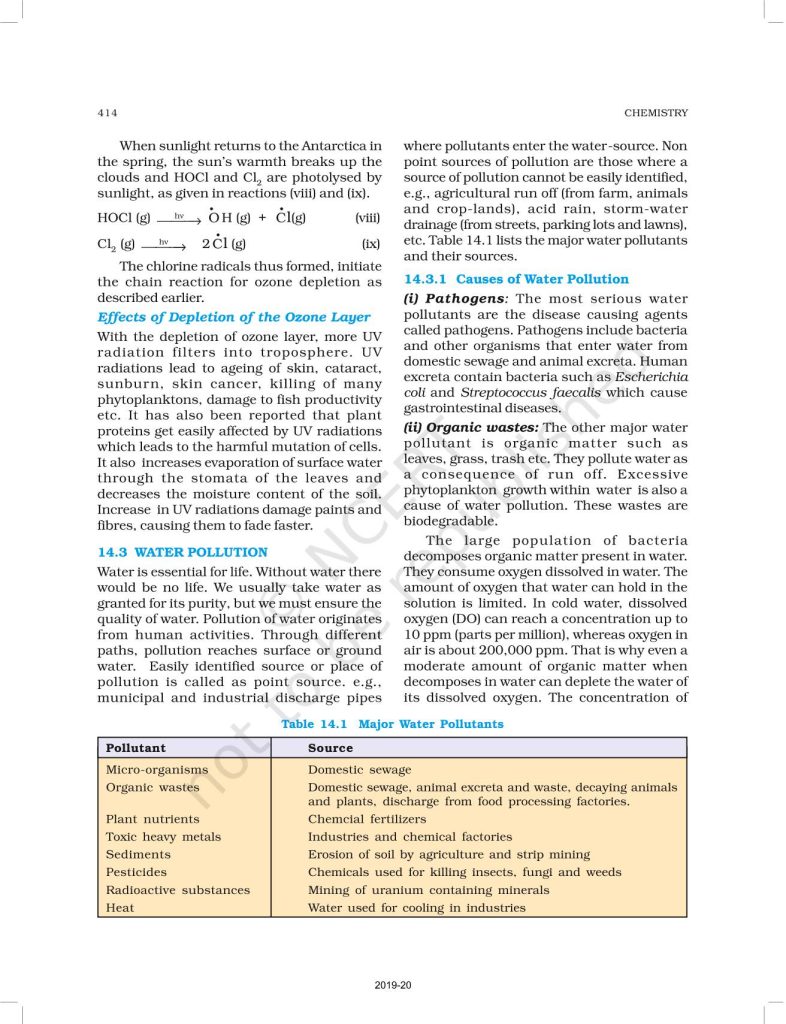
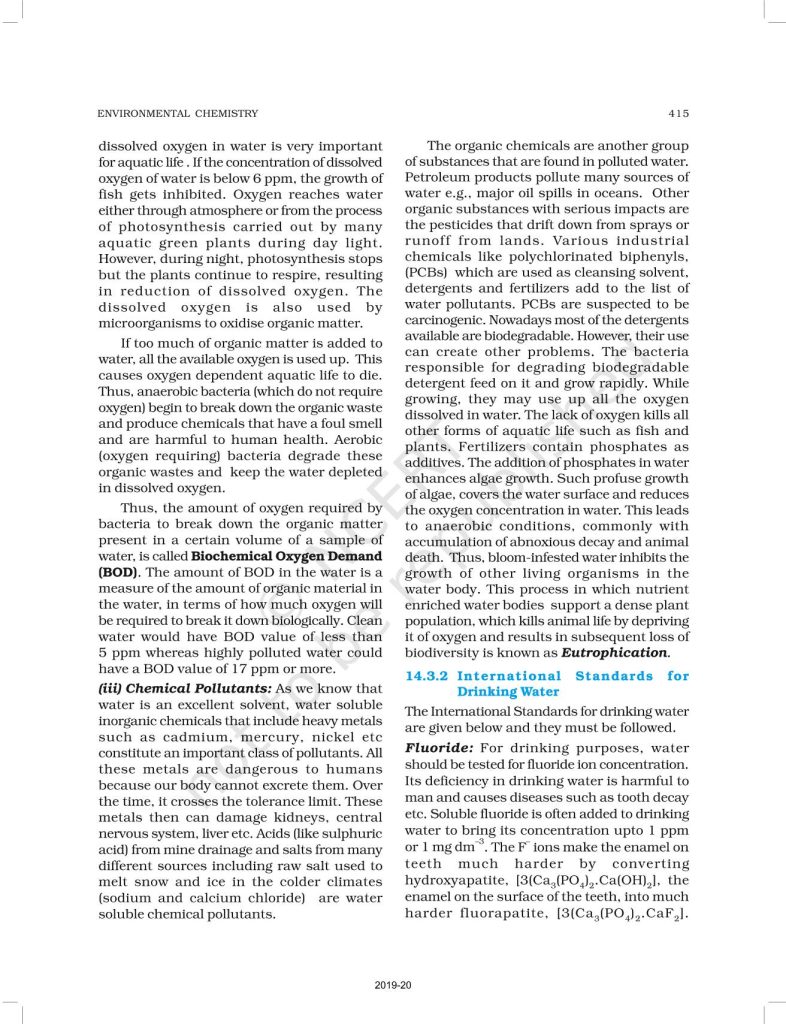
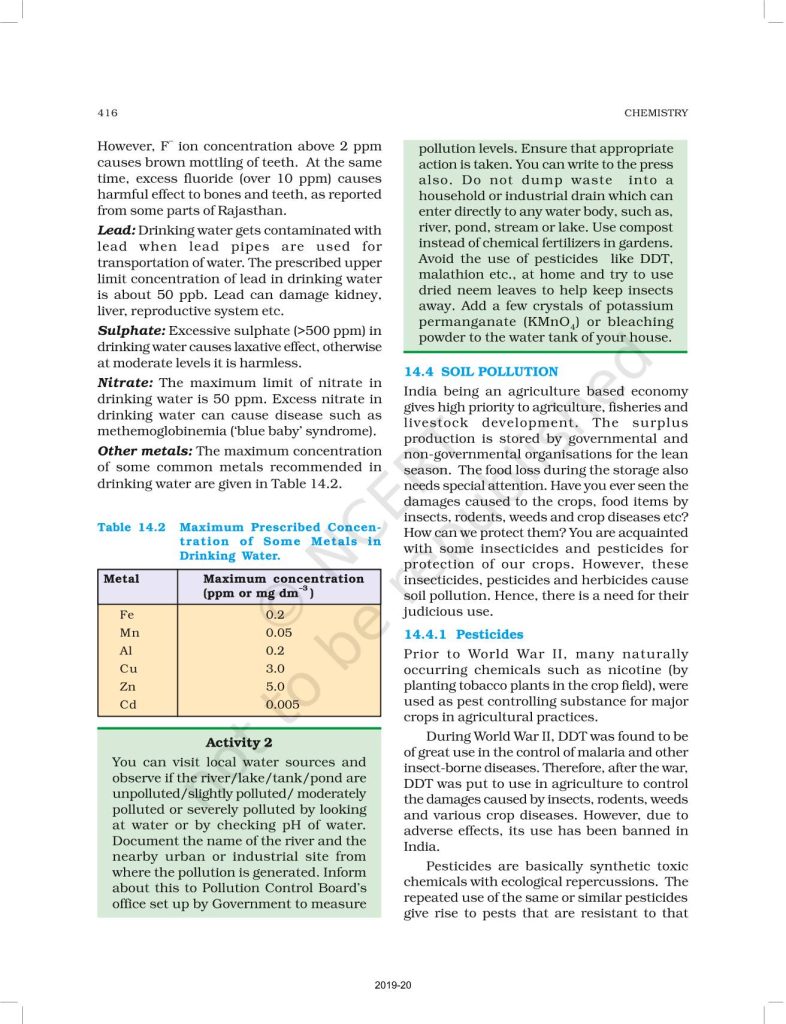
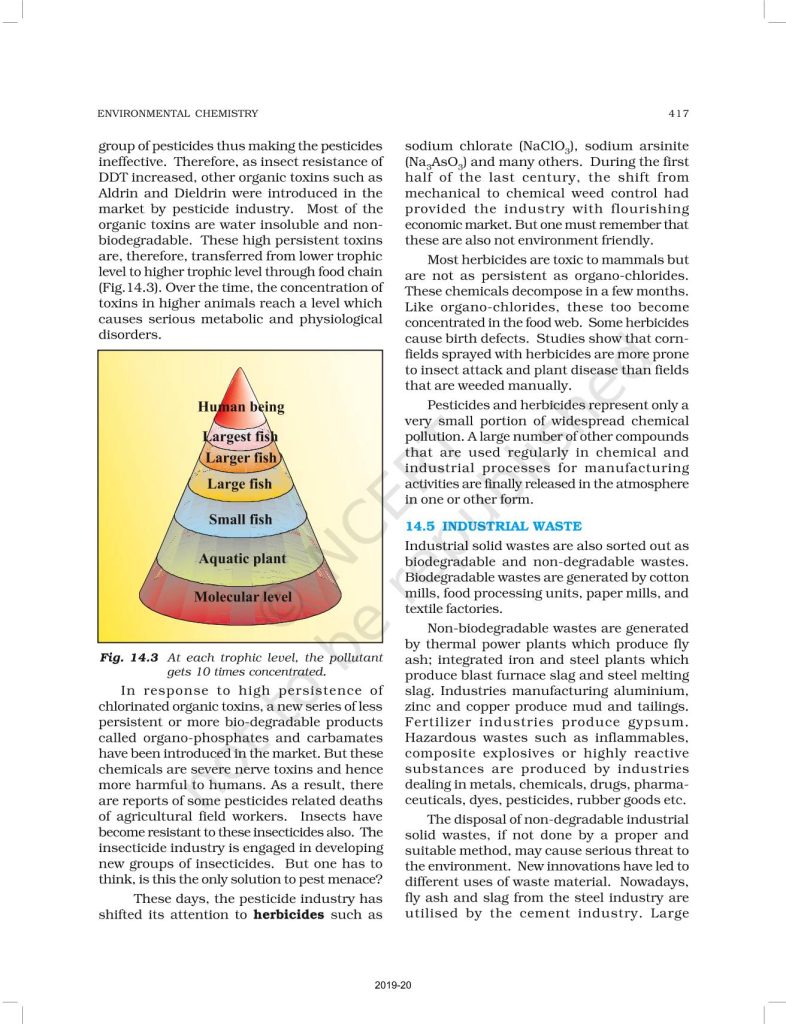
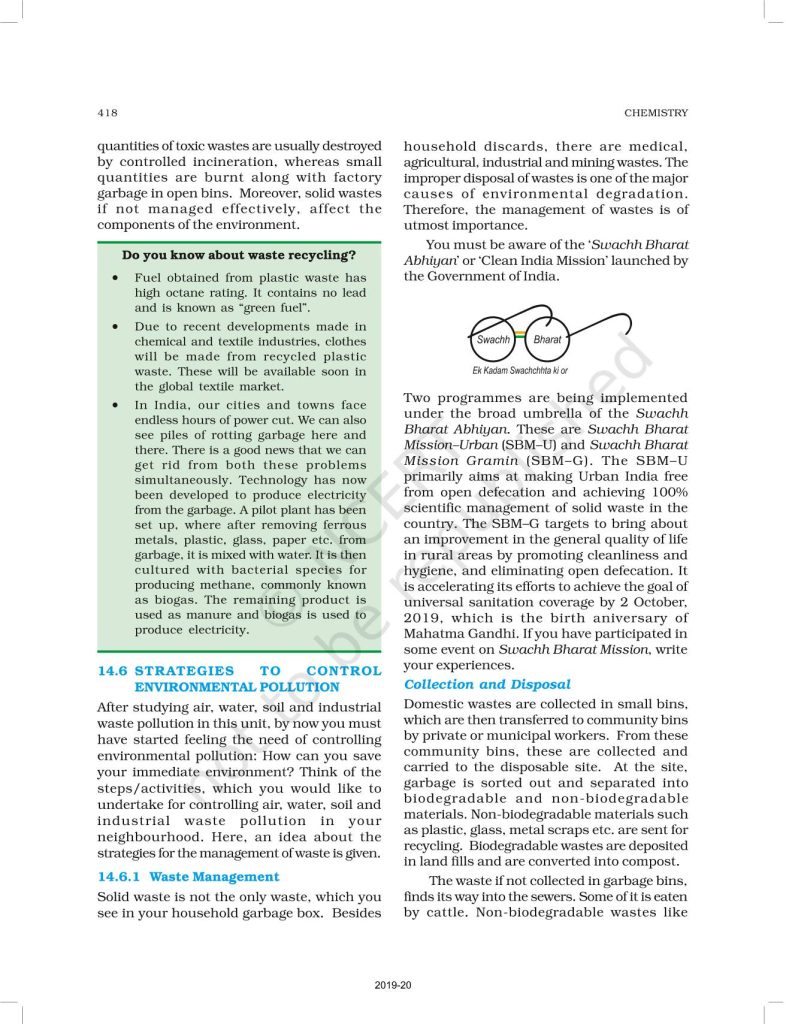
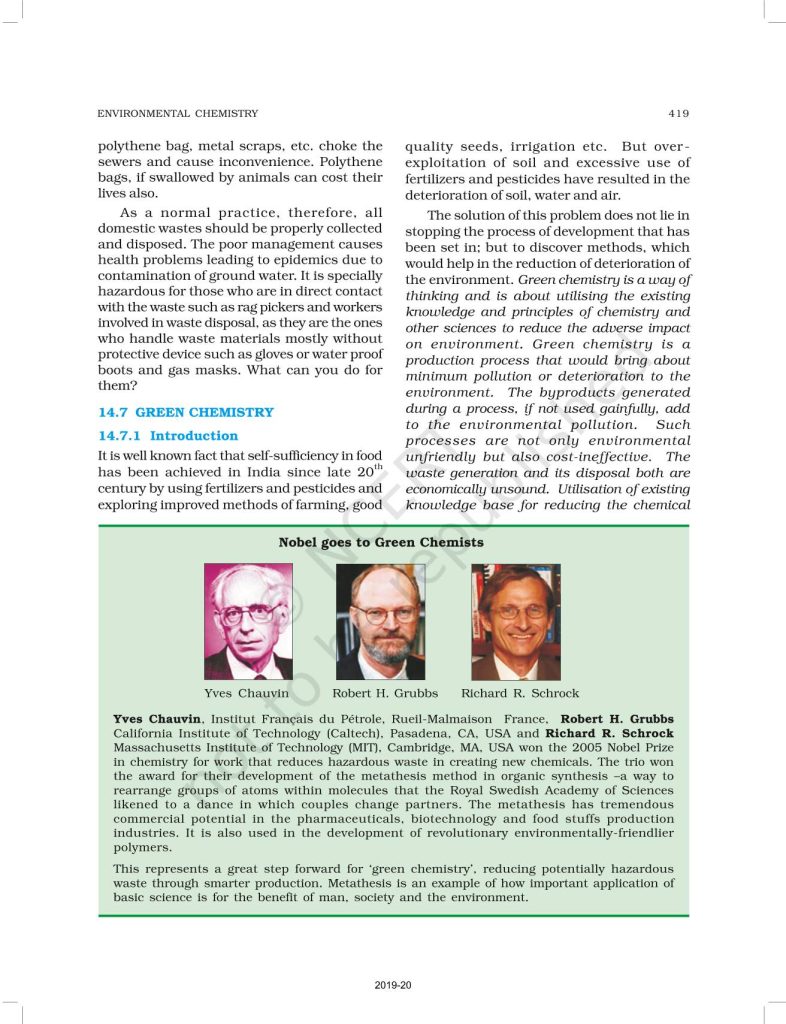
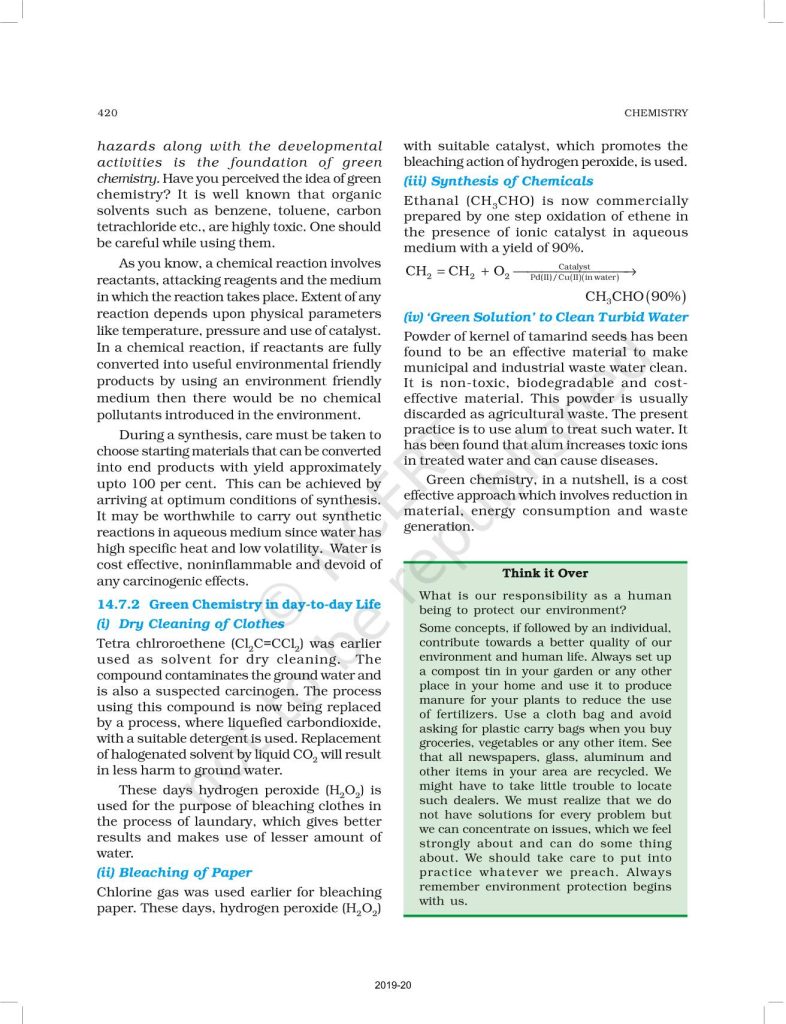
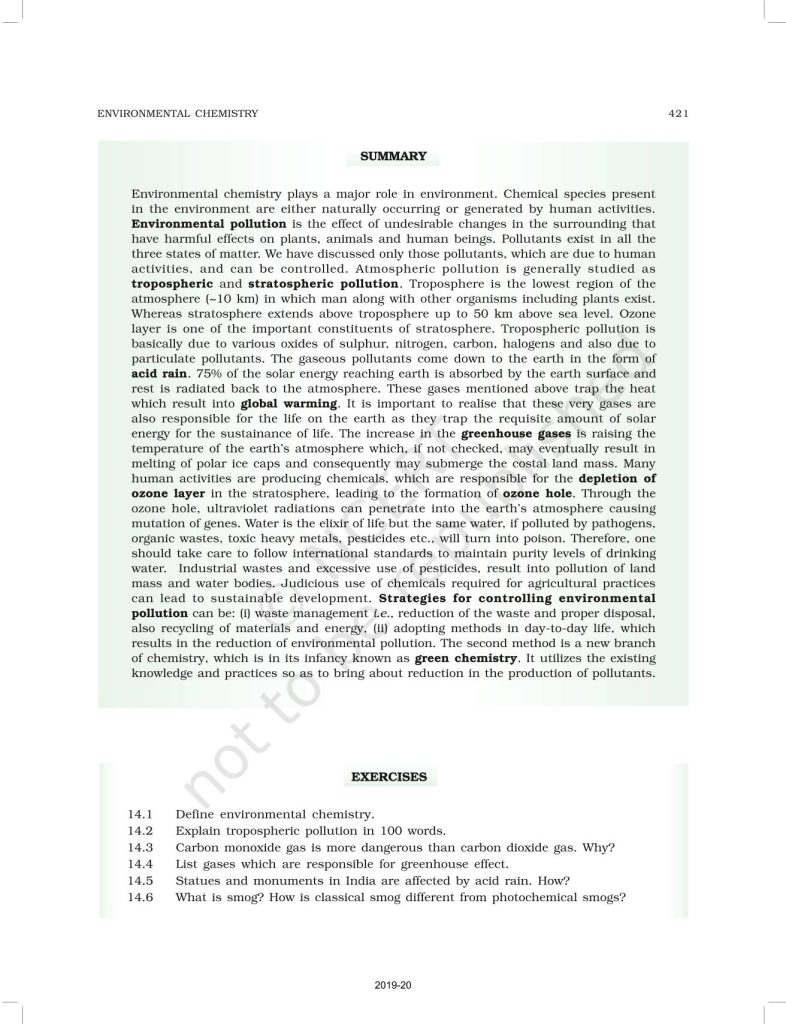
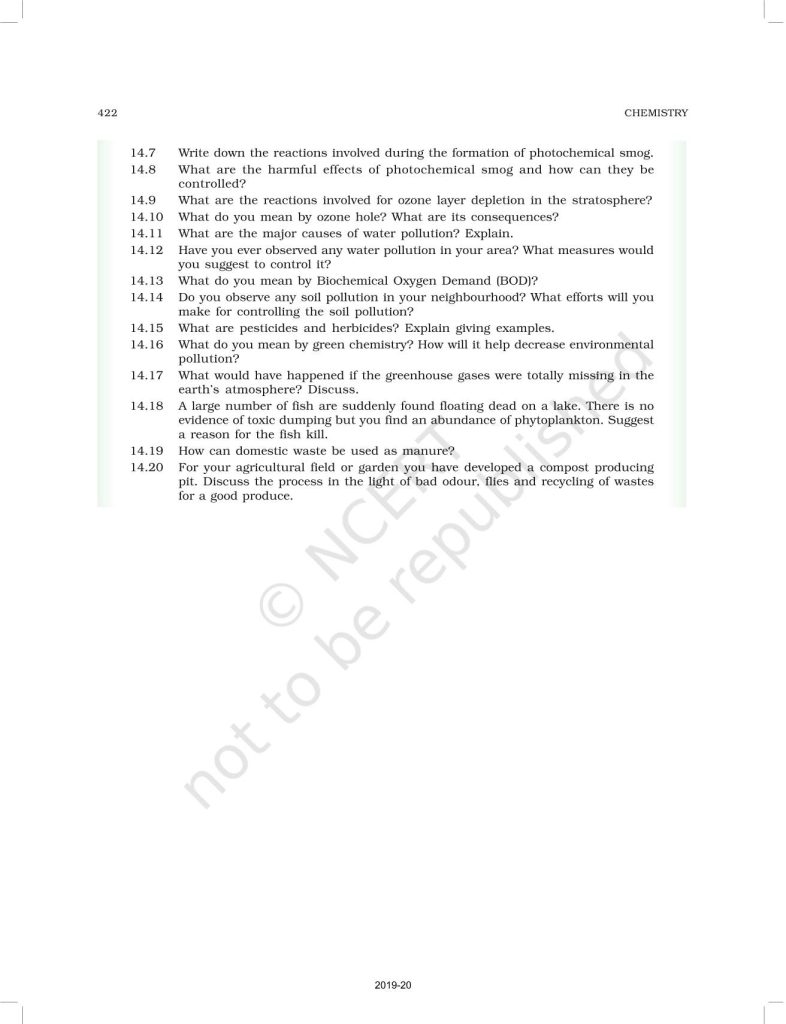
Environmental Chemistry focuses on the study of chemical processes occurring in the environment and their impact on living organisms. It explains different types of pollution, including air, water, soil, and noise pollution, along with their sources and harmful effects.

The chapter also discusses important topics such as the greenhouse effect, global warming, acid rain, ozone layer depletion, and methods of pollution control. Understanding environmental chemistry helps students become aware of sustainable practices and environmental protection. This chapter is important for CBSE board exams and competitive exams like NEET and JEE.

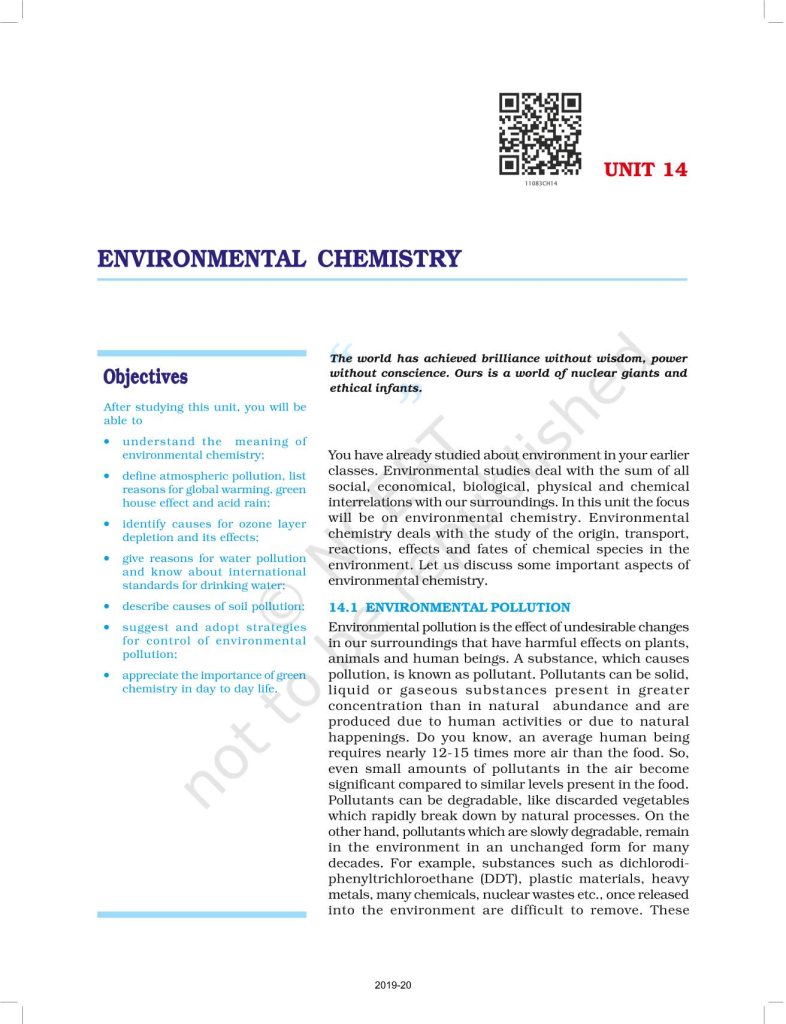
Environmental Chemistry Class 11 NCERT
Student doubts & questions

Stuck on this chapter? Ask below and get help from tutors and fellow students.

Ask a Doubt or Leave Feedback

Your email address will not be published. Required fields are marked *