Chapter 5 – States Of Matter
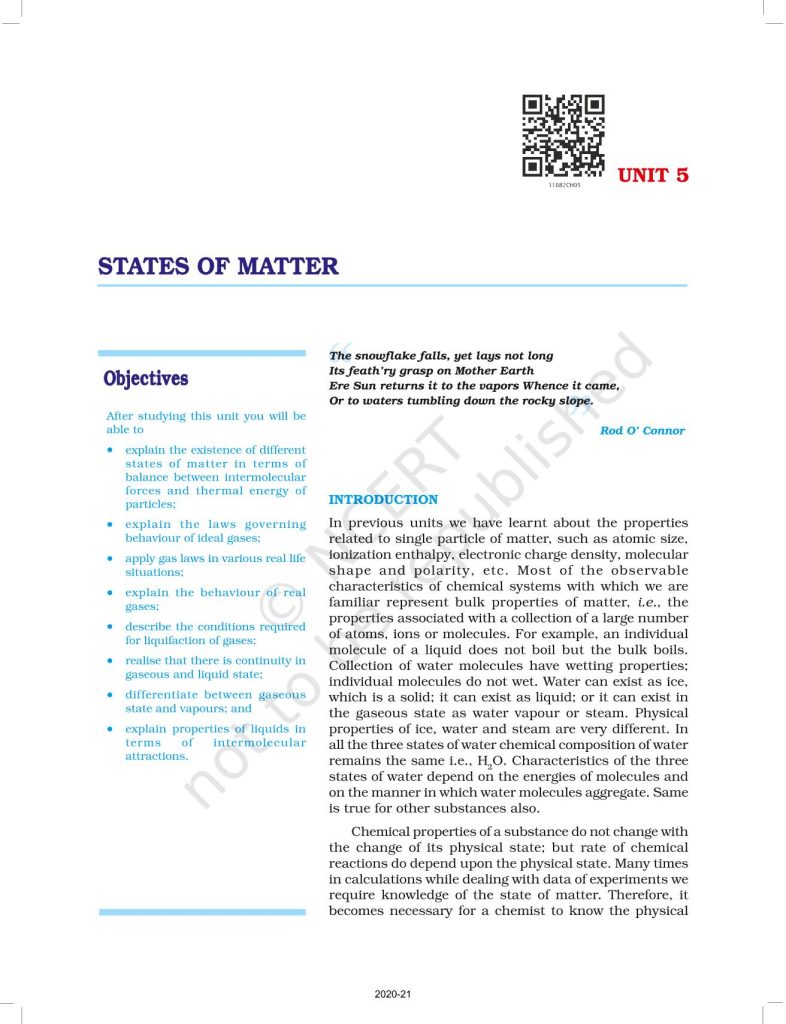
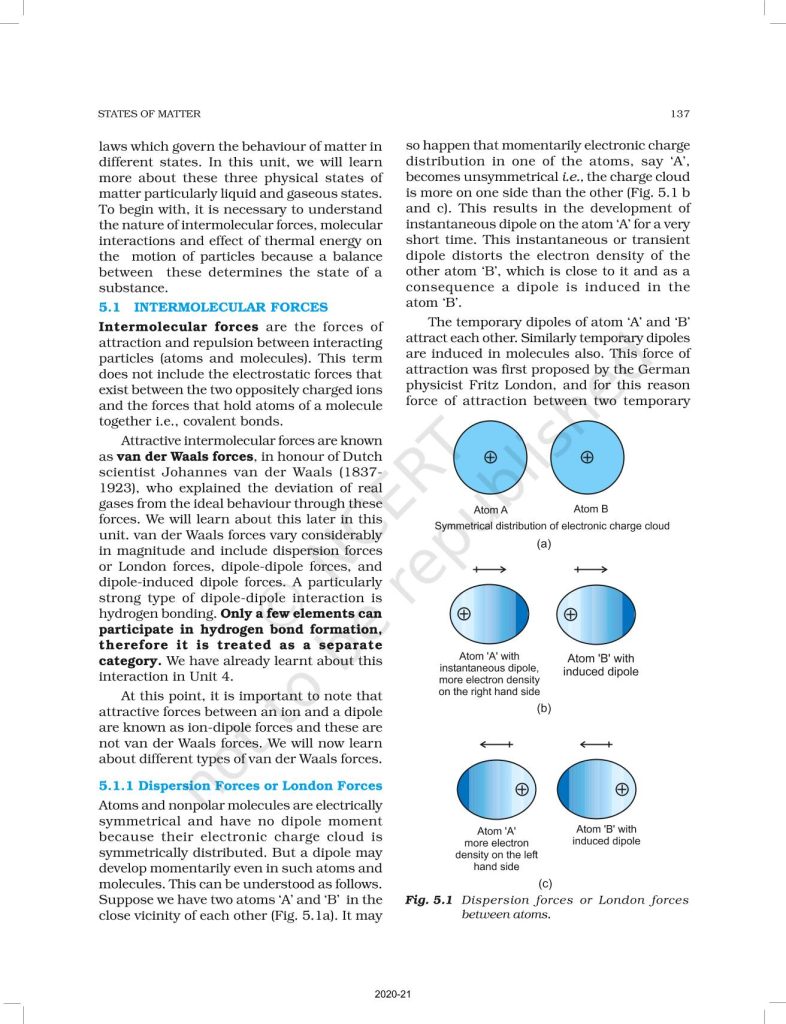
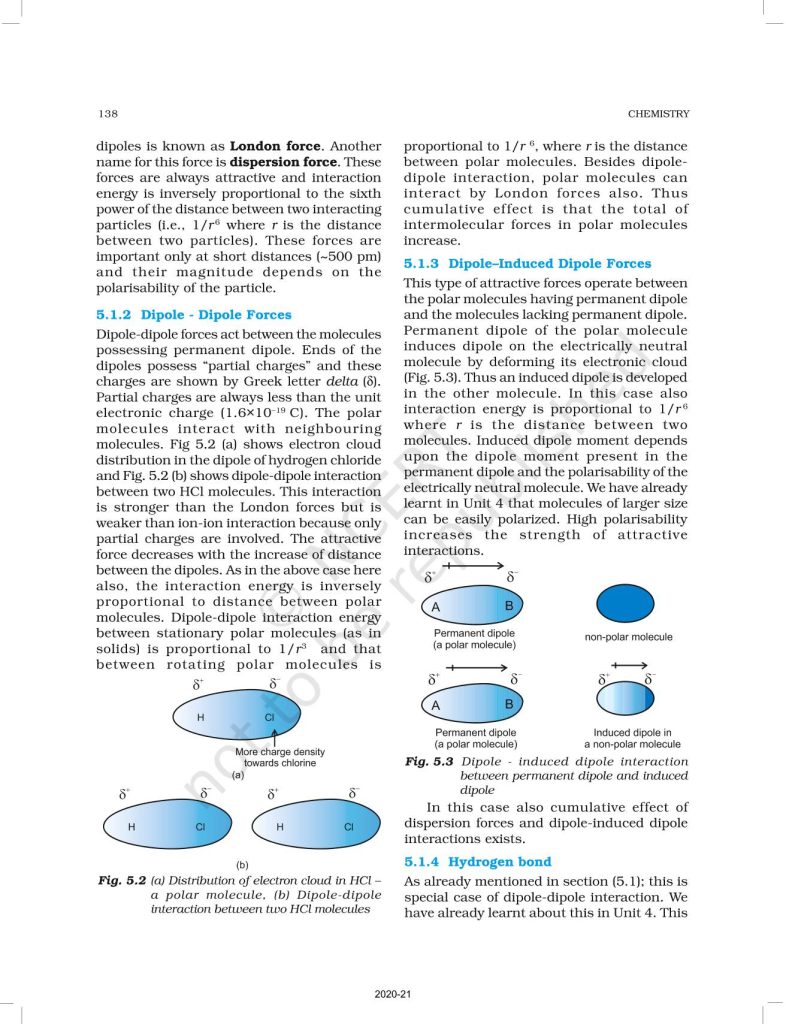
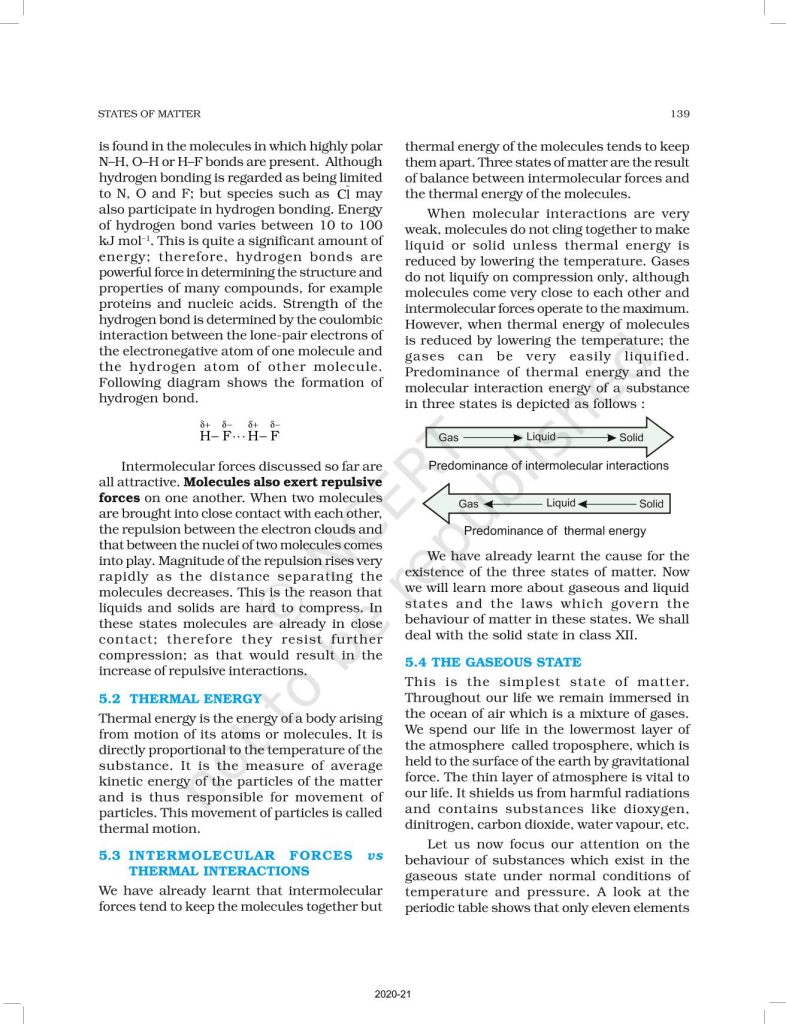
Chapter 5 – States of Matter explains the physical properties of solids, liquids, and gases and how particles behave in each state. It describes characteristics like shape, volume, compressibility, and intermolecular forces. The chapter introduces concepts such as intermolecular forces, thermal energy, and changes of state including melting, boiling, and sublimation.
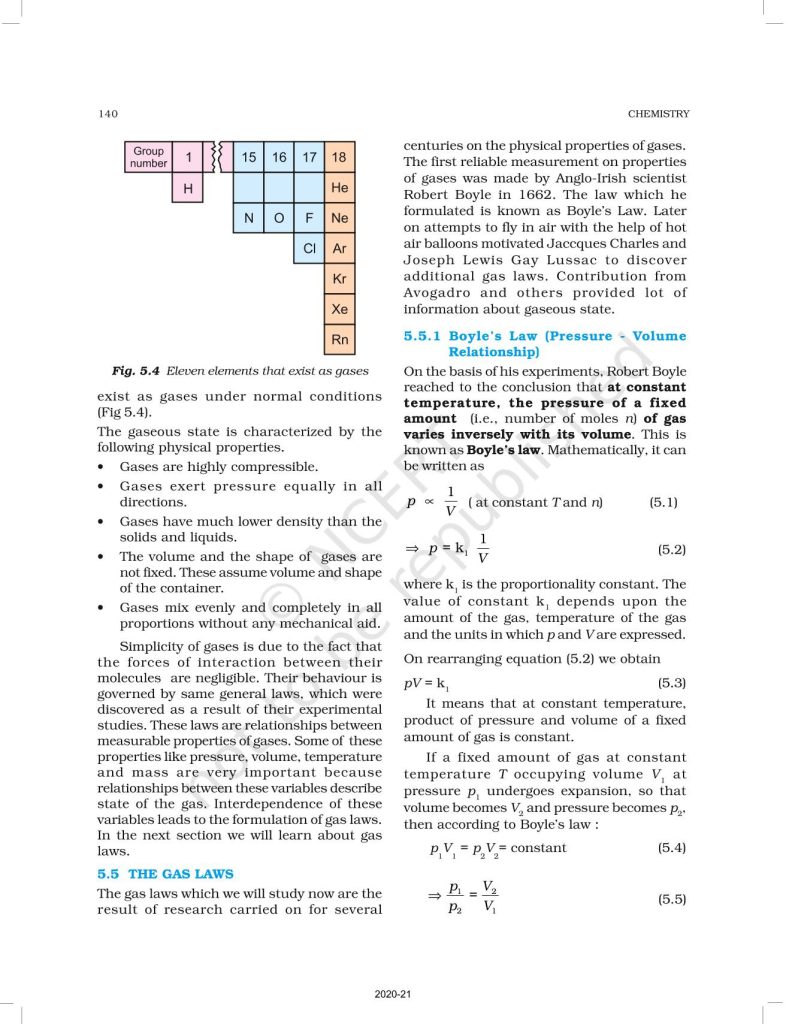
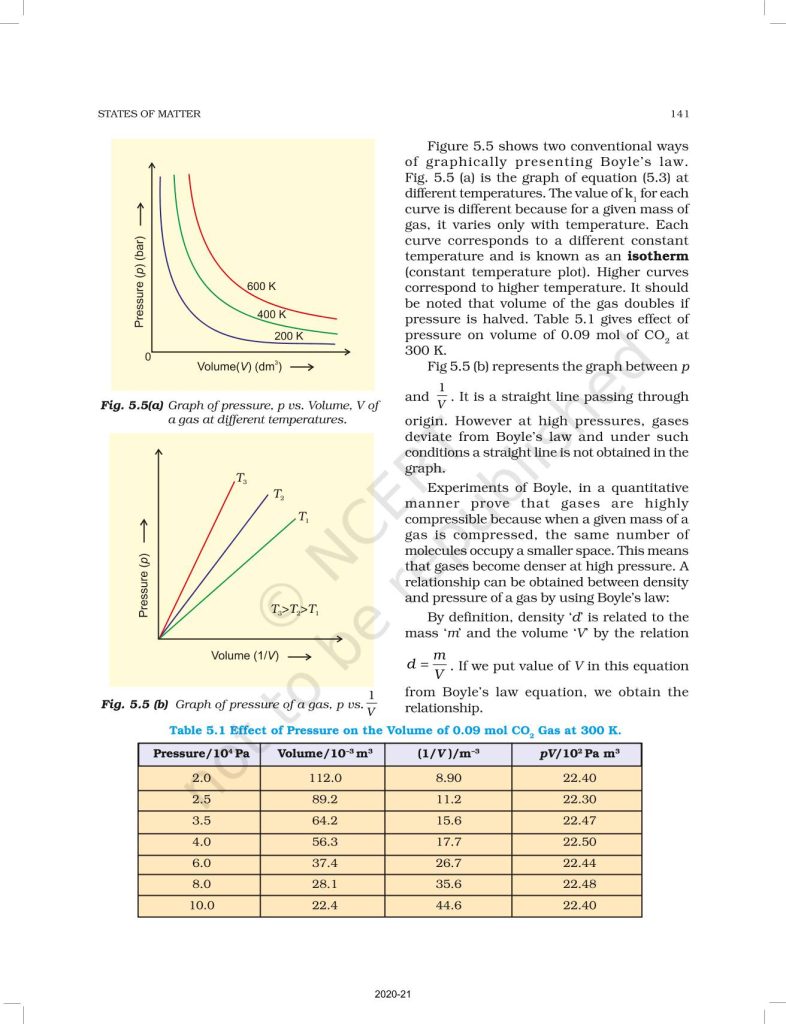
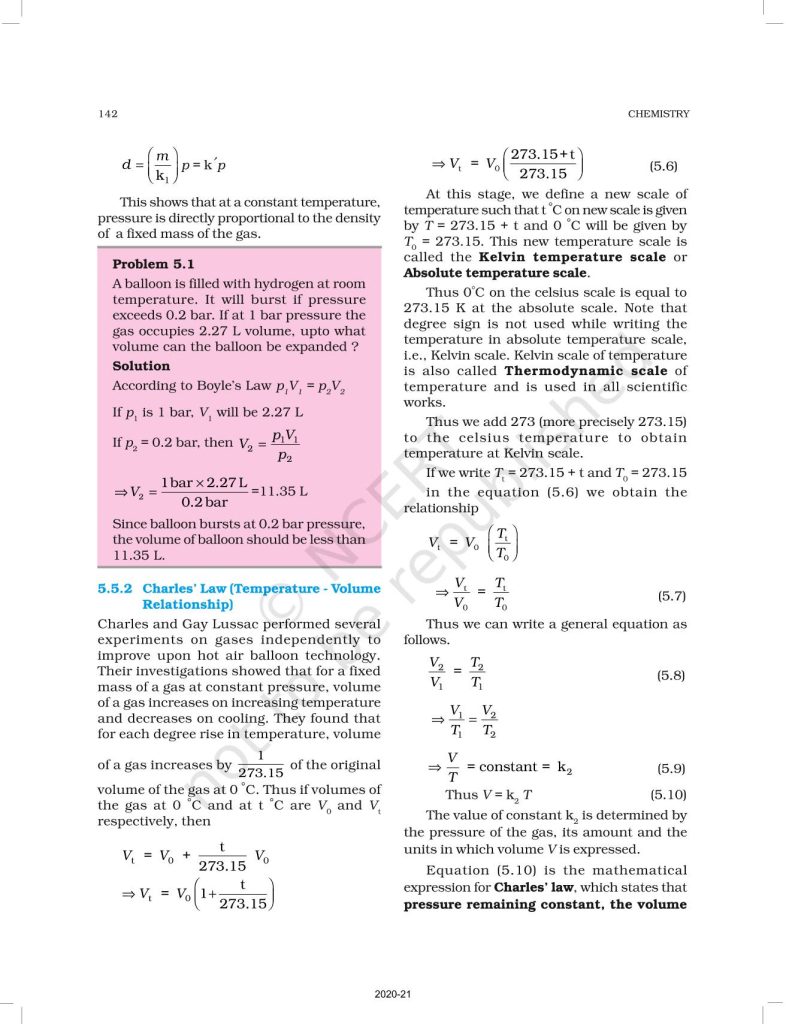
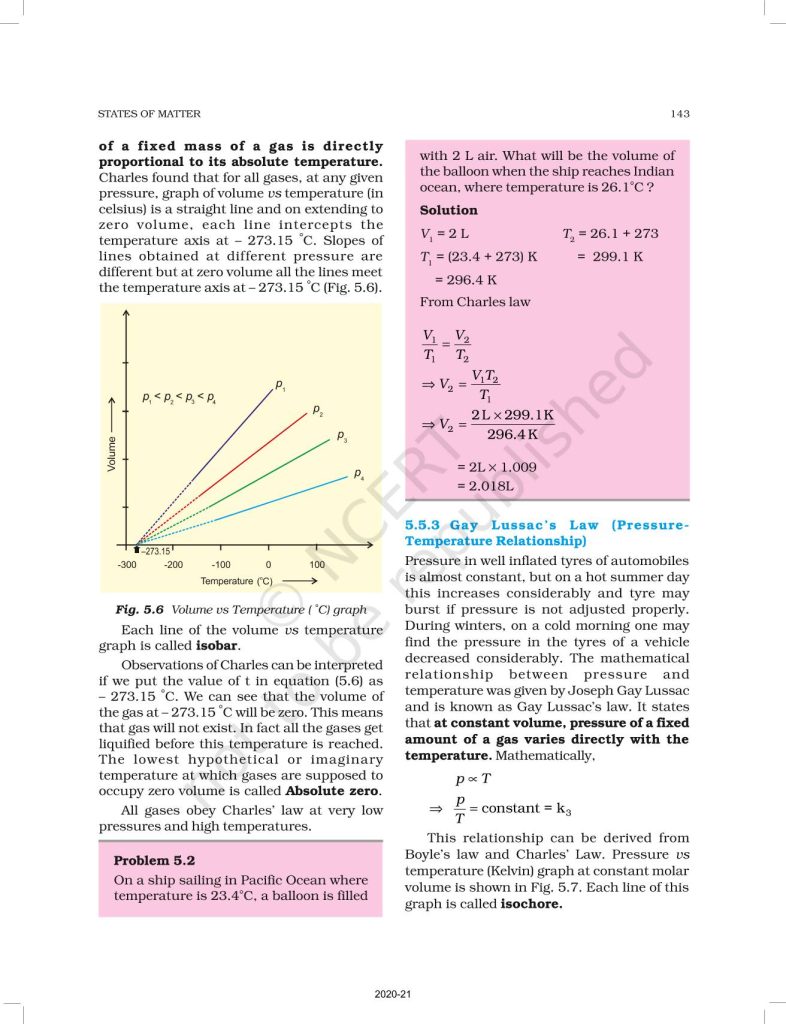
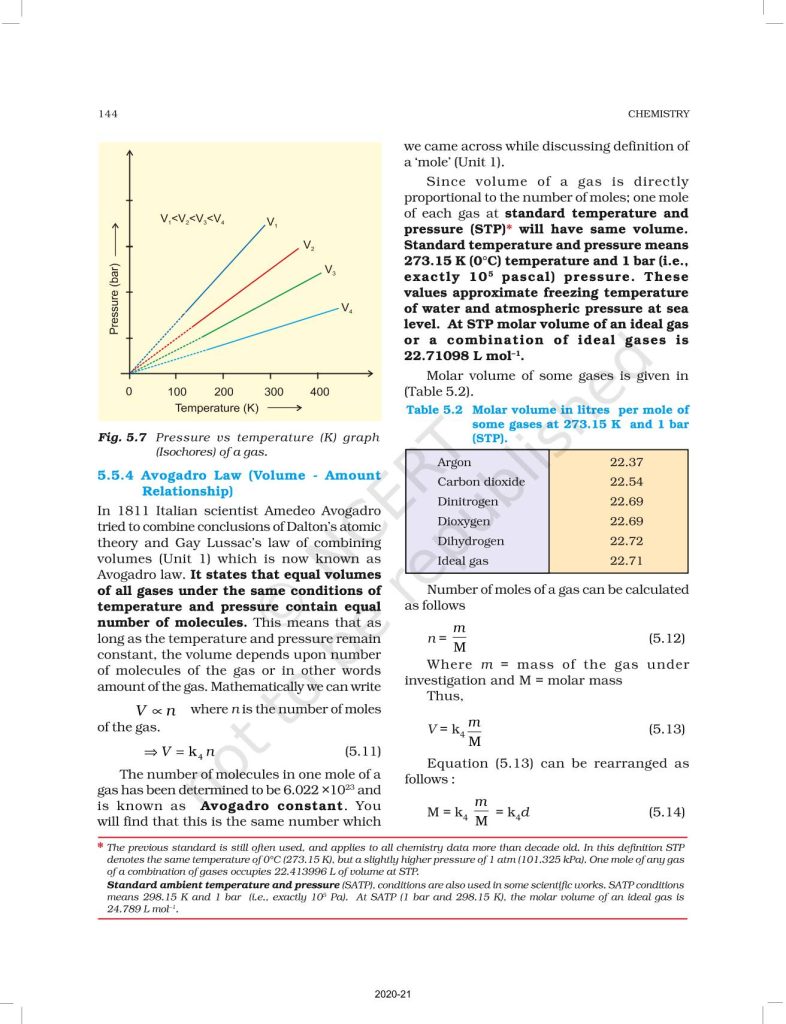
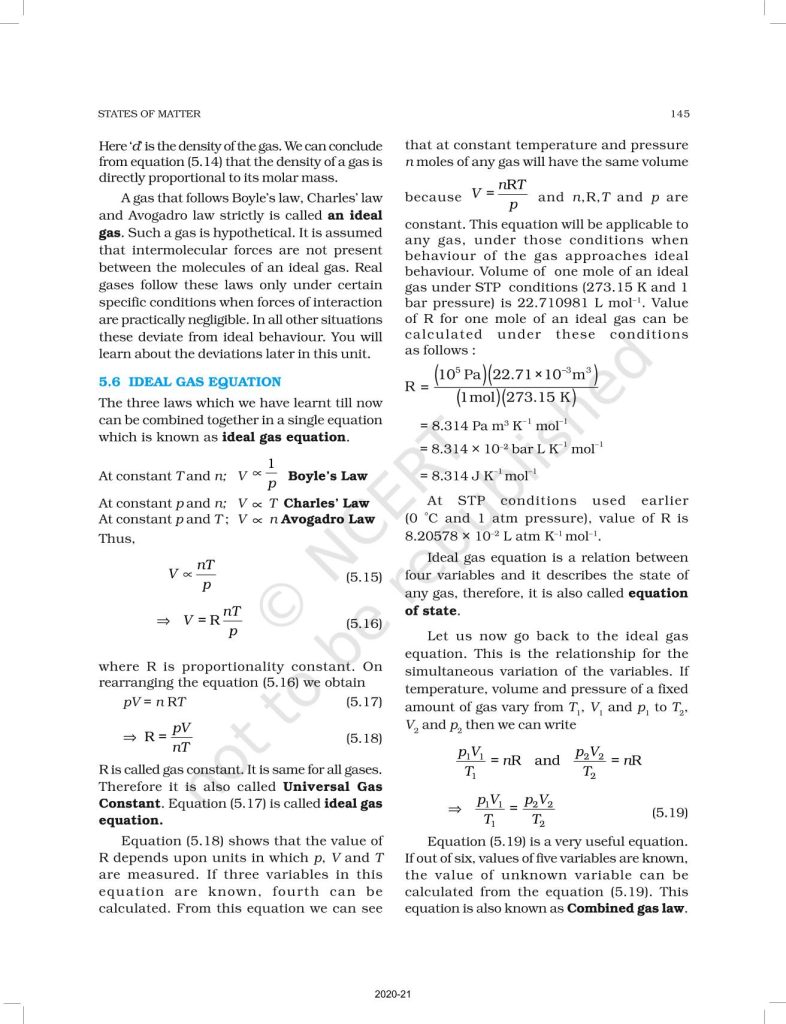
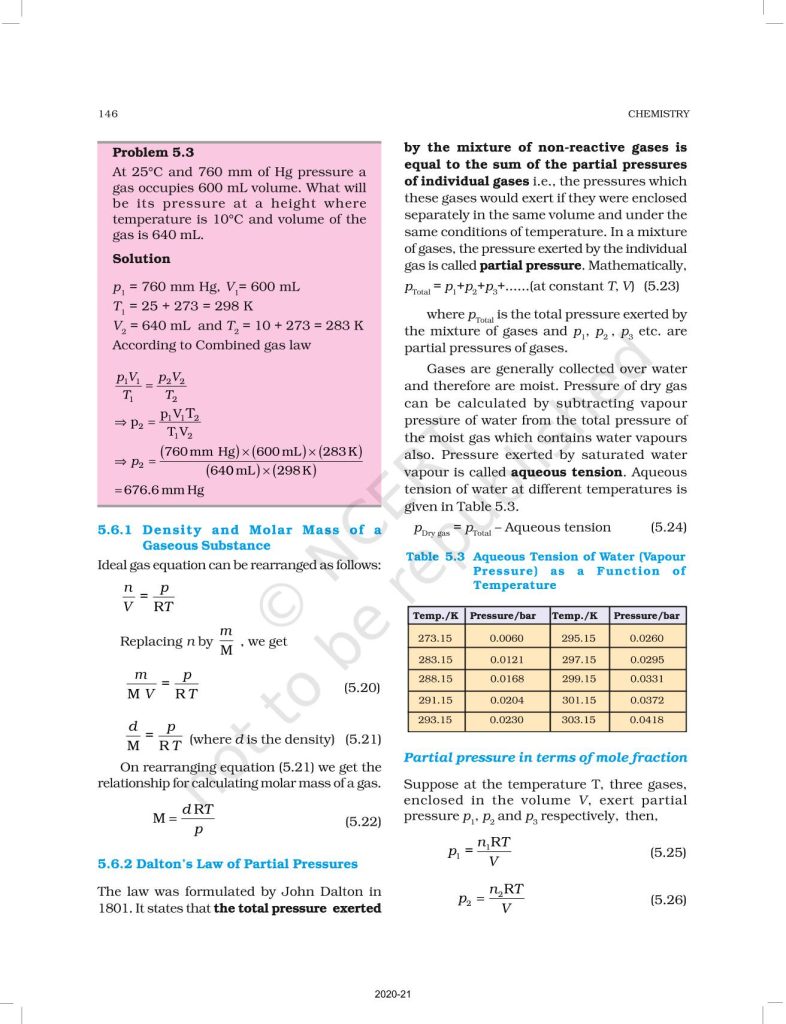
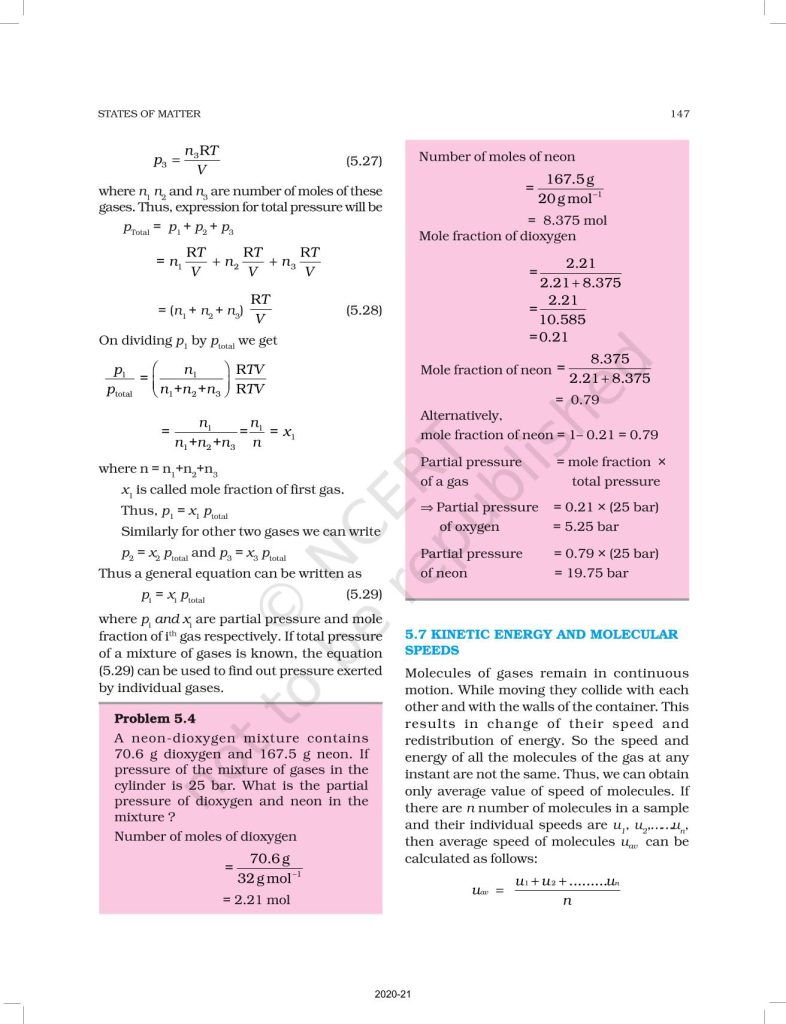
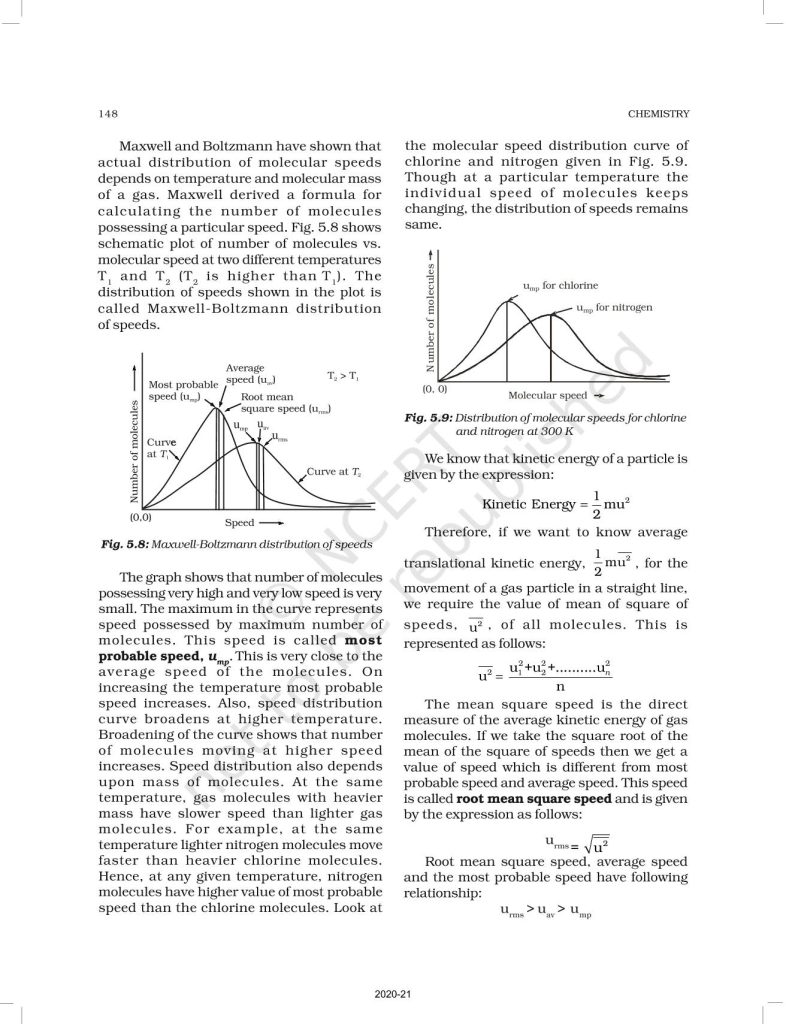
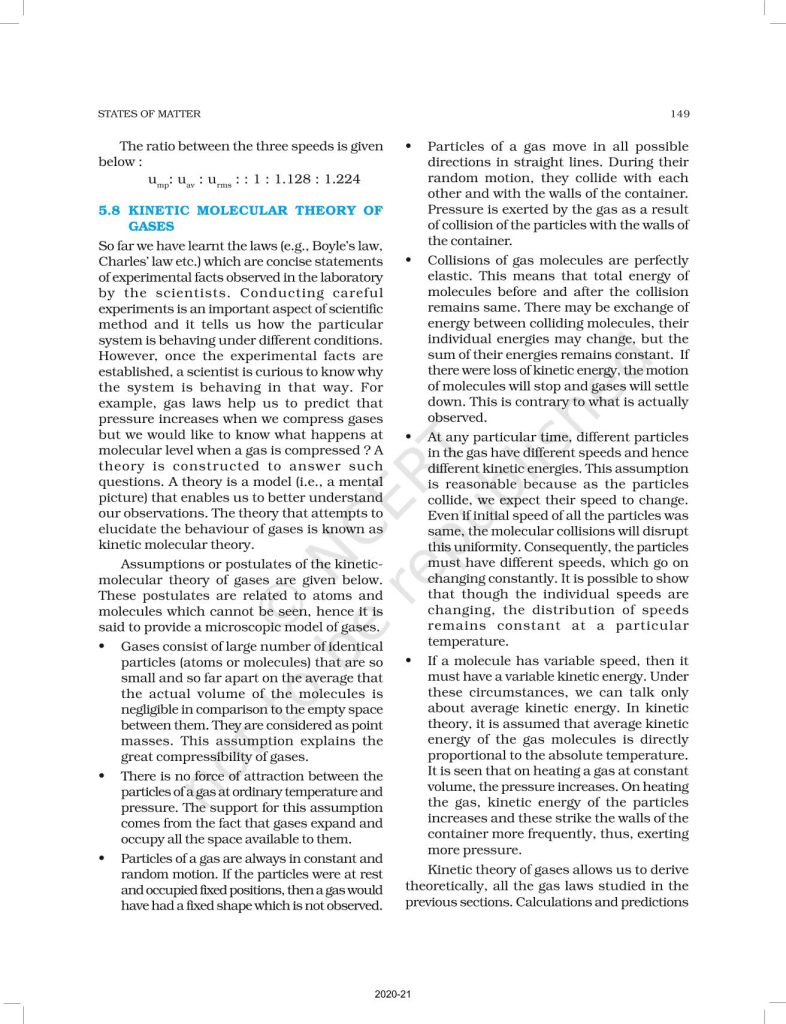
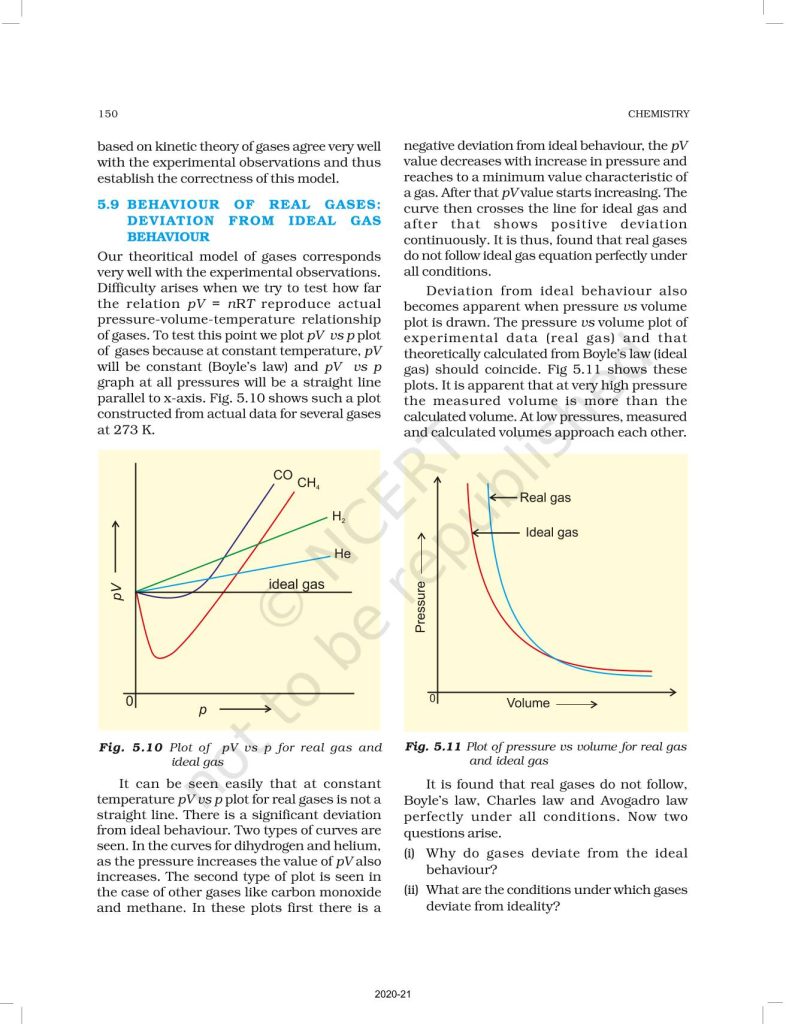
A major focus is on the gaseous state, including important gas laws such as Boyle’s Law, Charles’s Law, Gay-Lussac’s Law, and the Ideal Gas Equation. It also explains the kinetic molecular theory of gases and deviations from ideal behavior. This chapter is essential for understanding physical chemistry and is highly important for CBSE board exams, NEET, and JEE preparation.
States of matter NCERT Class 11

Student doubts & questions
Stuck on this chapter? Ask below and get help from tutors and fellow students.