NCERT Book for Class 11 Biology – (Chapter 12 – Mineral Nutrition)

AI Exam Summary 2 min quick recap

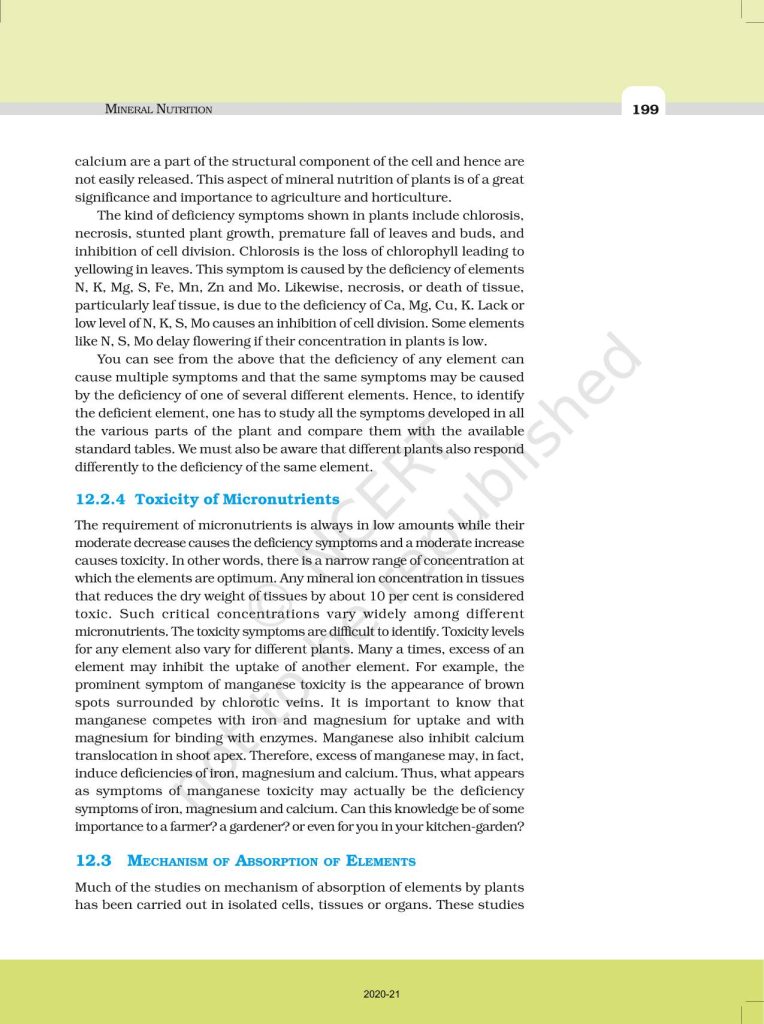
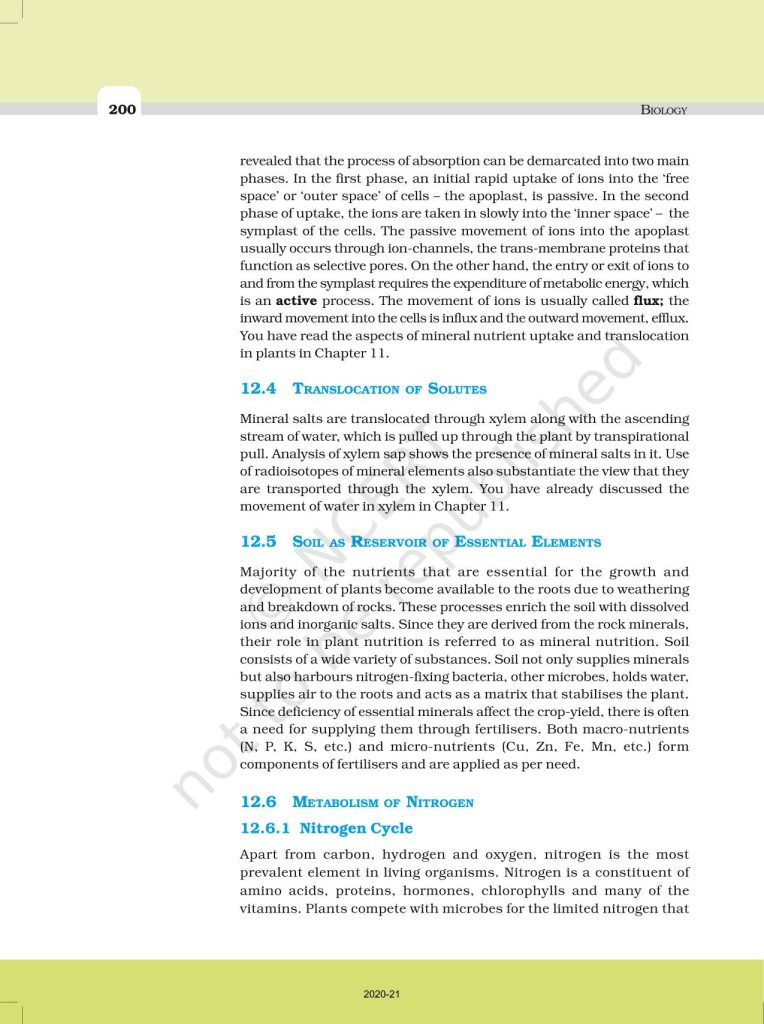
Chapter 12 – Mineral Nutrition Mineral Nutrition is an important chapter in Class 11 Biology that explains how plants obtain and utilize essential mineral elements from the soil.

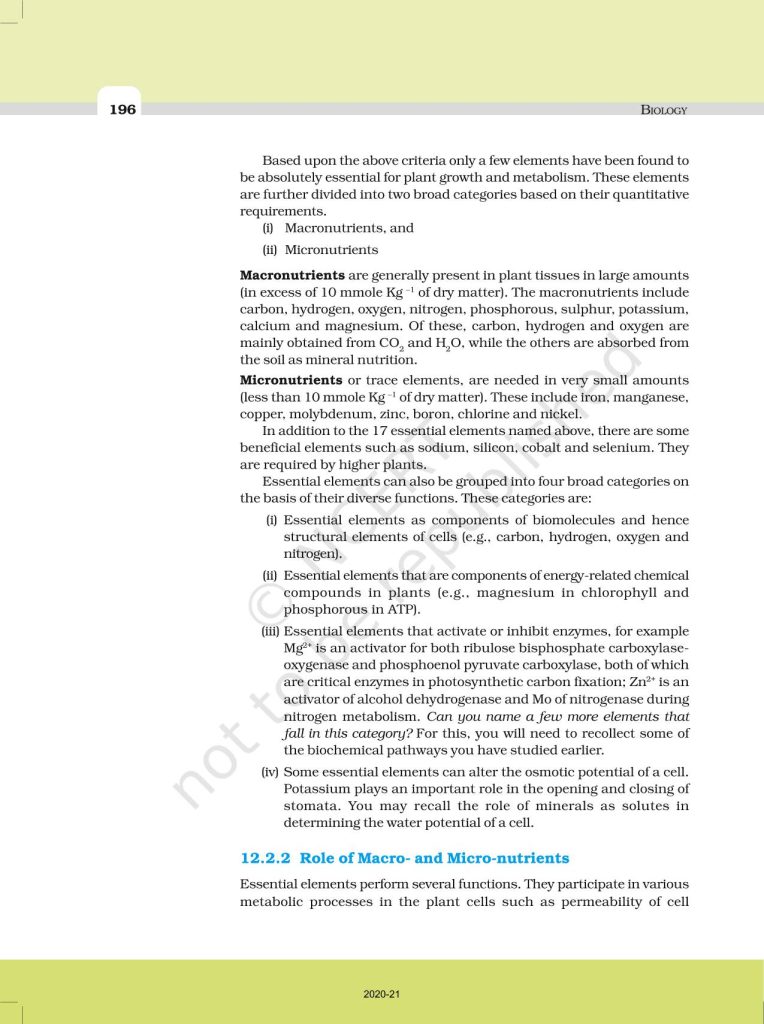
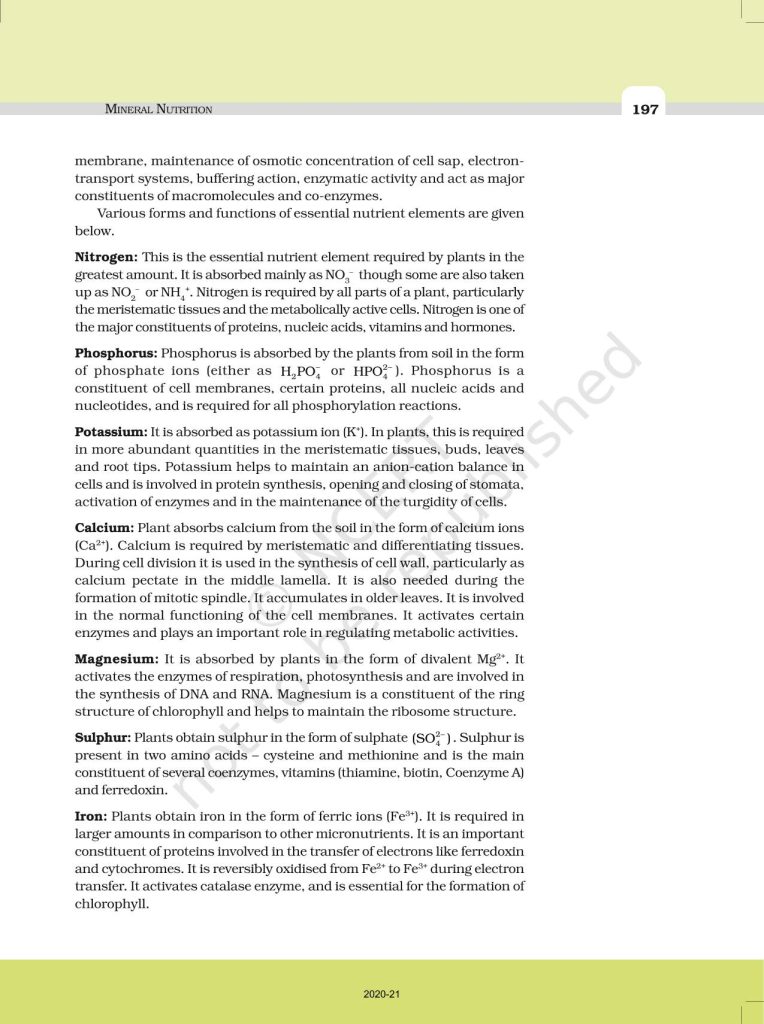
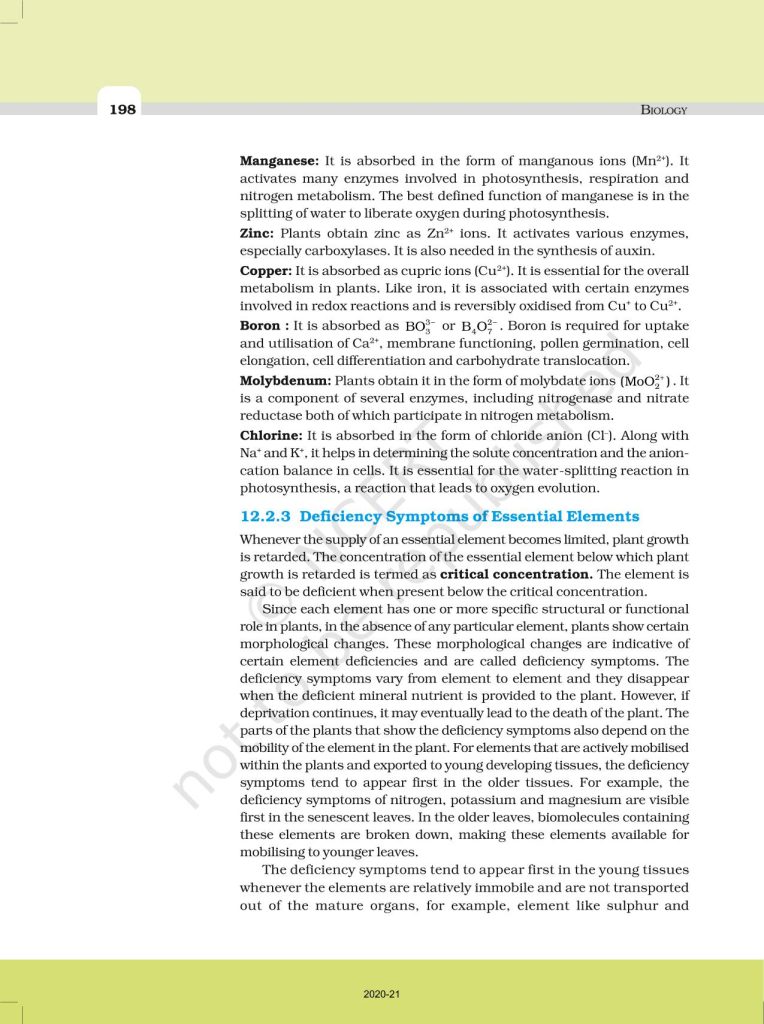
  • Plants require various macronutrients such as nitrogen, phosphorus, potassium, calcium, magnesium, and sulfur, and micronutrients like iron, manganese, zinc, copper, boron, molybdenum, chlorine, and nickel for proper growth and development.
  • This chapter discusses the criteria for essentiality of elements, the role of each nutrient, and the deficiency symptoms caused by their absence.
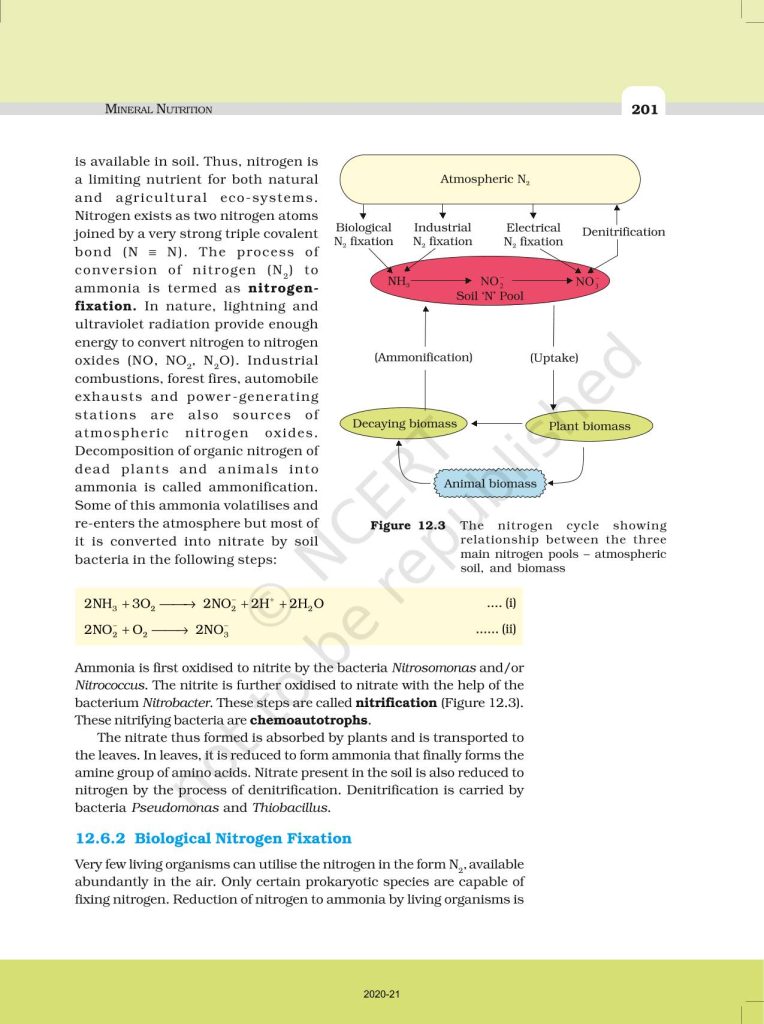
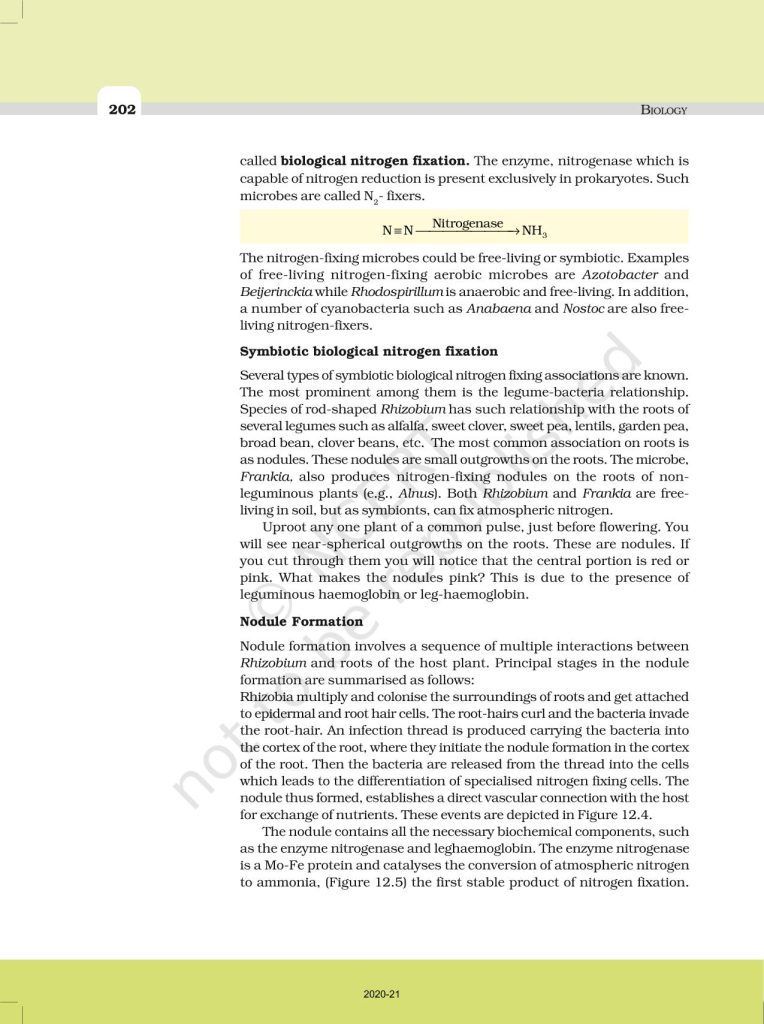
  • It also covers important concepts such as hydroponics, nitrogen cycle, biological nitrogen fixation, and the role of Rhizobium in leguminous plants.
💡
High-Yield Topper Tip: Frequently tested in competitive exams. Focus on boundary conditions and conceptual exceptions.

Chapter 12 – Mineral Nutrition

Mineral Nutrition is an important chapter in Class 11 Biology that explains how plants obtain and utilize essential mineral elements from the soil. Plants require various macronutrients such as nitrogen, phosphorus, potassium, calcium, magnesium, and sulfur, and micronutrients like iron, manganese, zinc, copper, boron, molybdenum, chlorine, and nickel for proper growth and development.

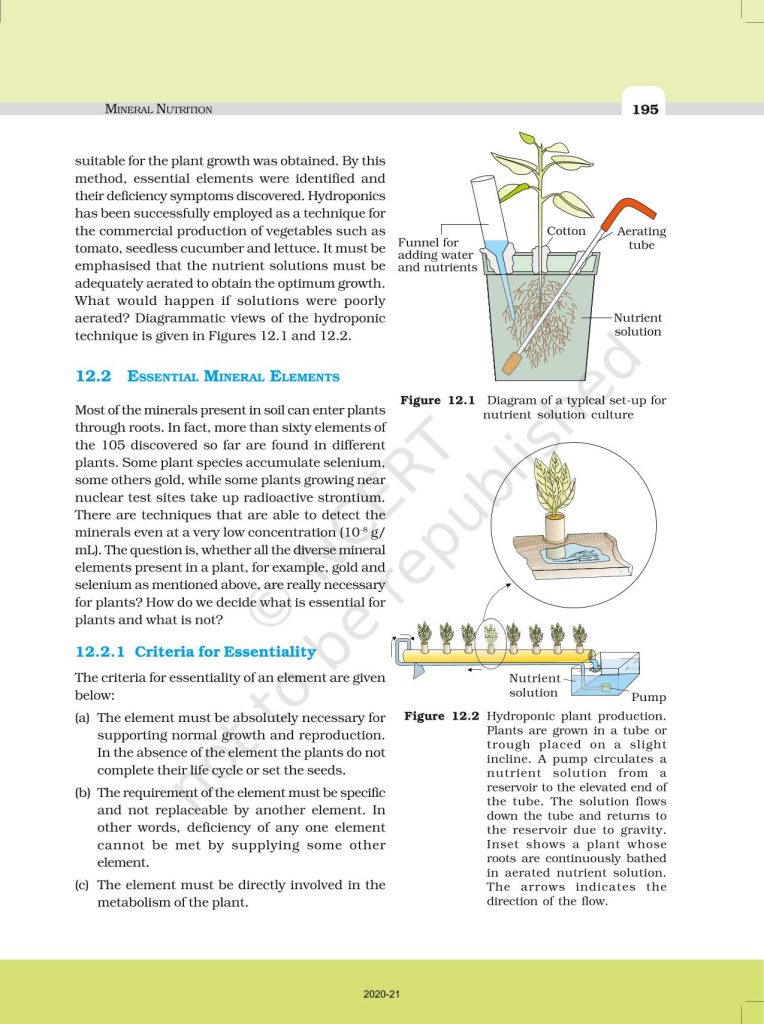
This chapter discusses the criteria for essentiality of elements, the role of each nutrient, and the deficiency symptoms caused by their absence. It also covers important concepts such as hydroponics, nitrogen cycle, biological nitrogen fixation, and the role of Rhizobium in leguminous plants. Understanding mineral nutrition helps students grasp plant metabolism and productivity, which is crucial for exams like CBSE and NEET.

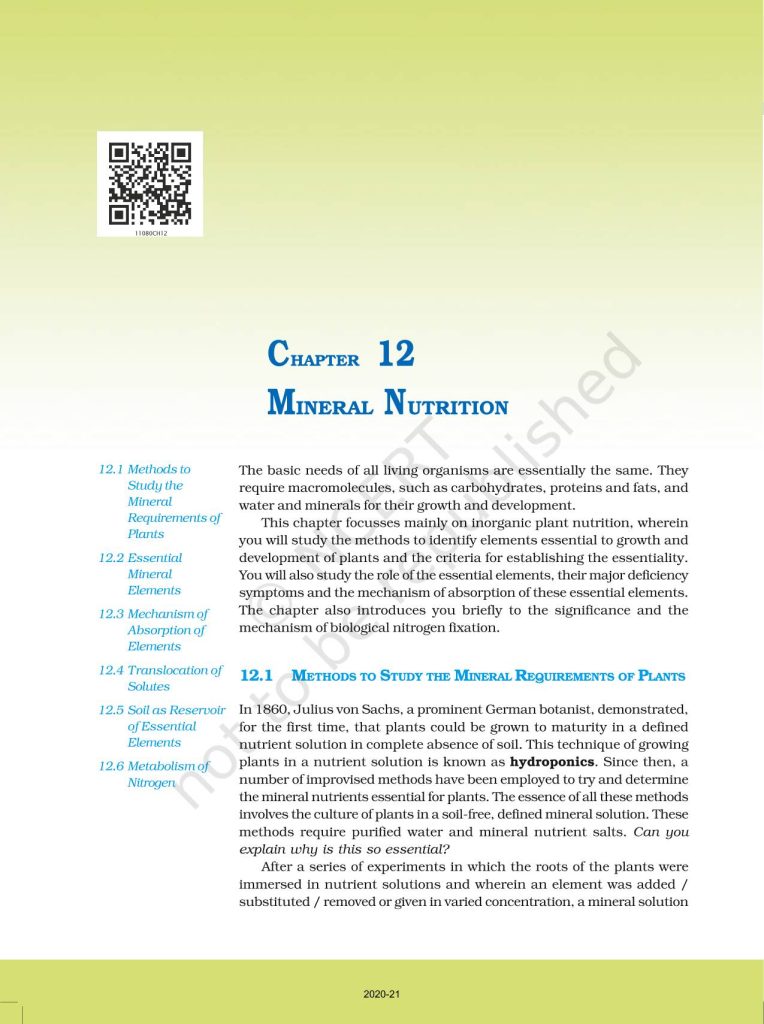
Mineral nutrition NCERT
Student doubts & questions

Stuck on this chapter? Ask below and get help from tutors and fellow students.

Ask a Doubt or Leave Feedback

Your email address will not be published. Required fields are marked *