NCERT Book for Class 11 Biology – (Chapter 13 – Photosynthesis In Higher Plants)

AI Exam Summary 2 min quick recap

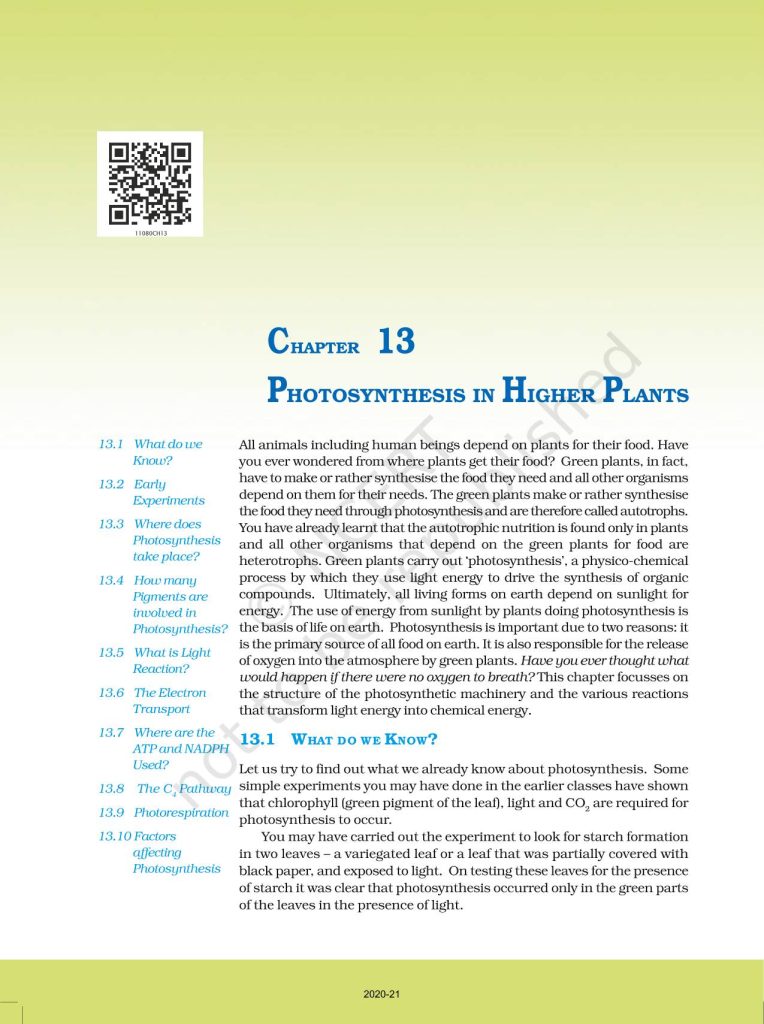
Chapter 13 – Photosynthesis In Higher Plants Photosynthesis in Higher Plants is a vital chapter in Class 11 Biology that explains how green plants prepare their own food using sunlight.

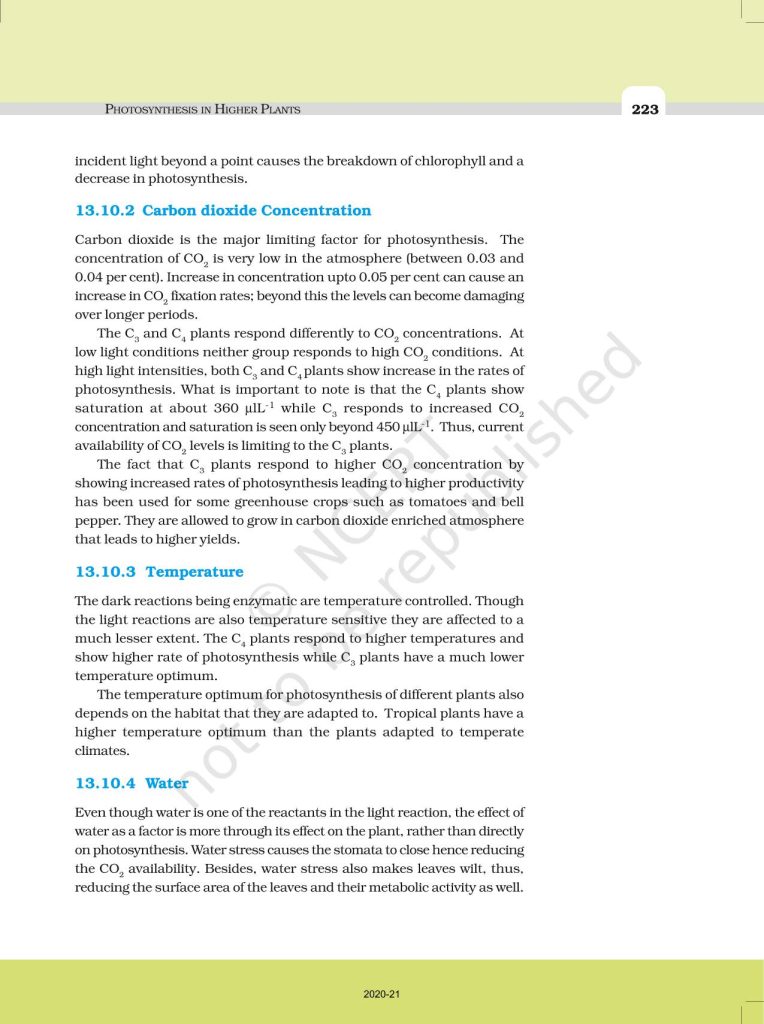
  • This process takes place in the chloroplasts, where chlorophyll captures light energy to convert carbon dioxide and water into glucose and oxygen.
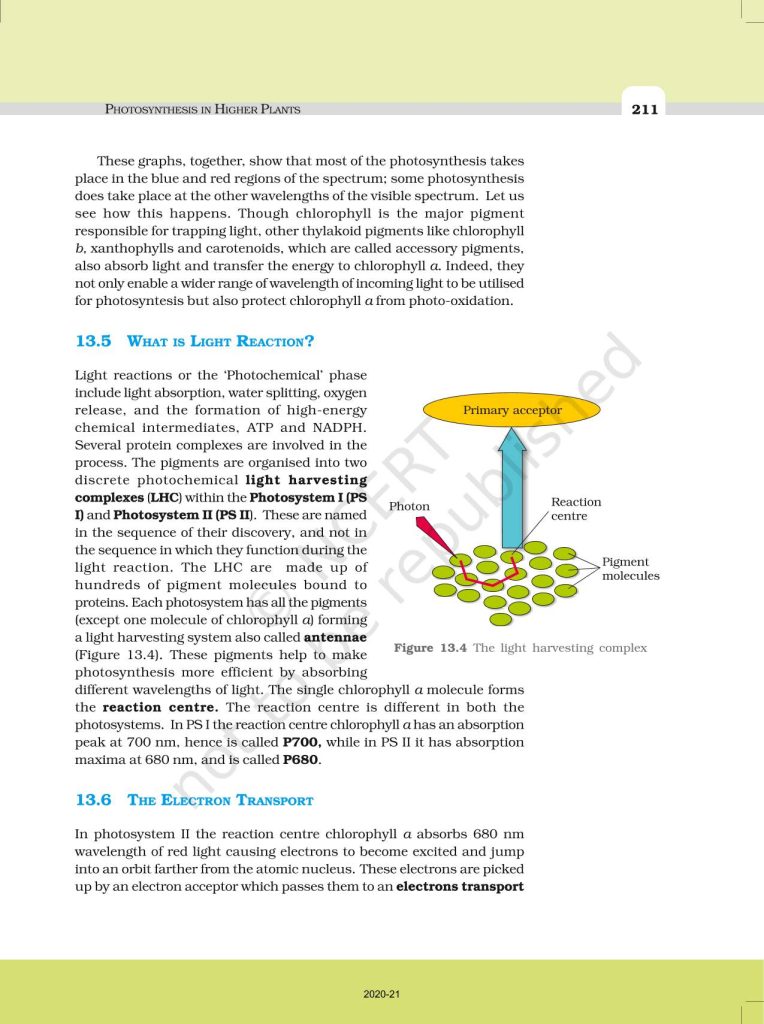
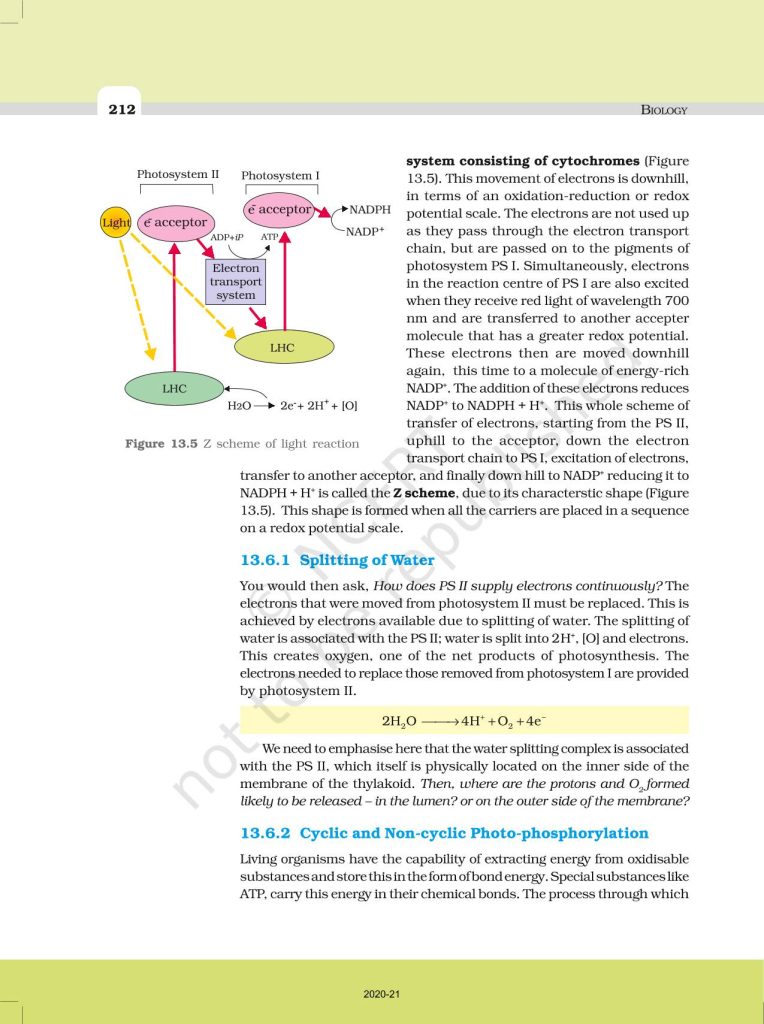
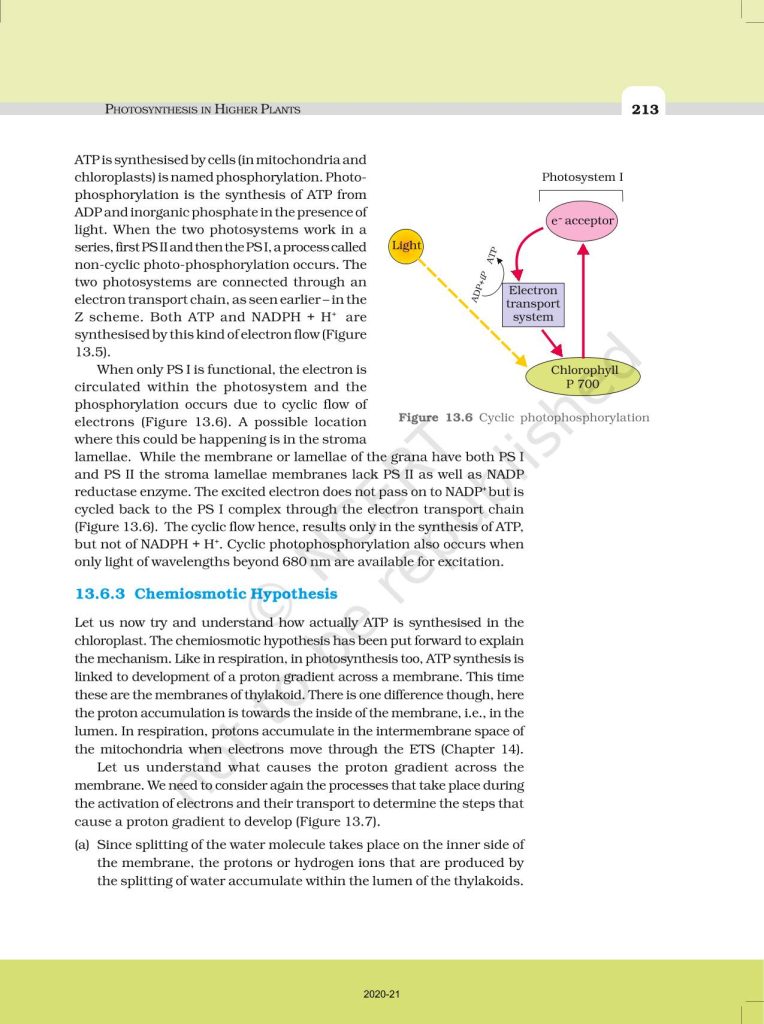
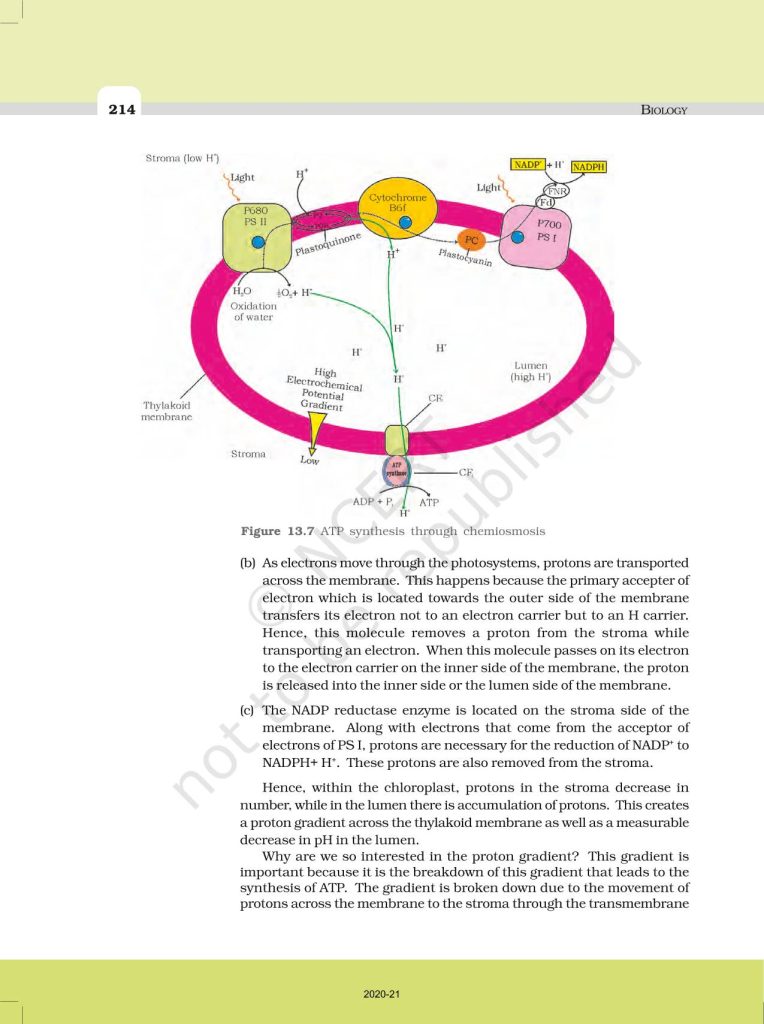
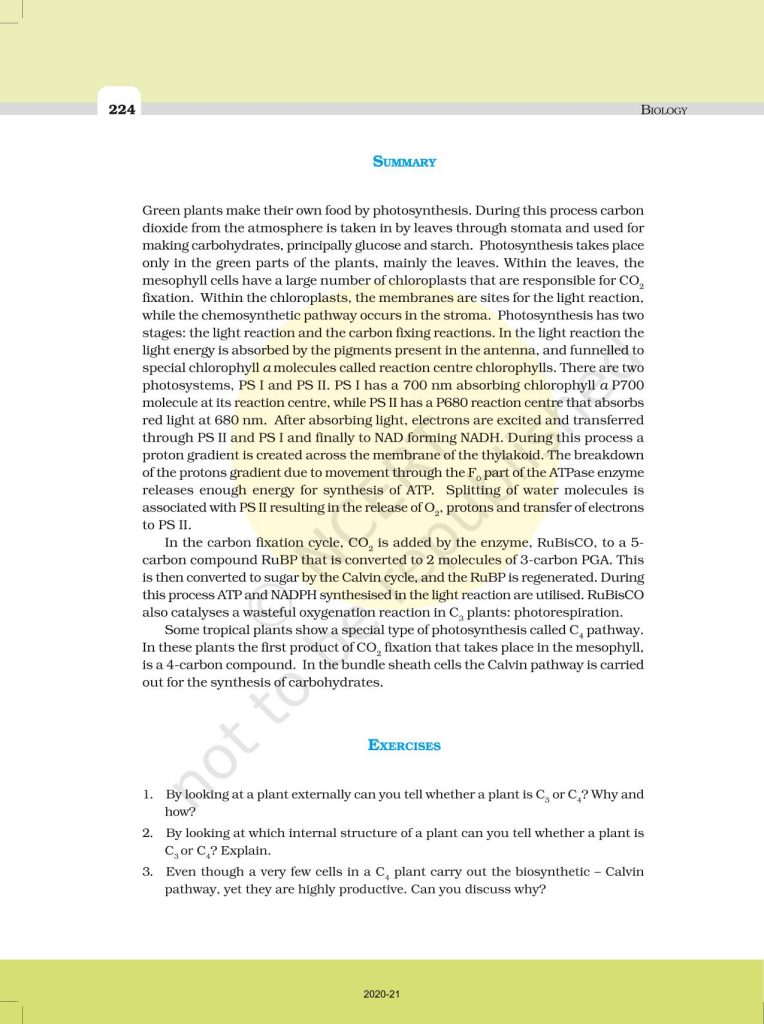
  • The chapter covers important topics such as light reaction and dark reaction (Calvin cycle), photosystems (PS I and PS II), photophosphorylation, and the role of ATP and NADPH in energy transfer.
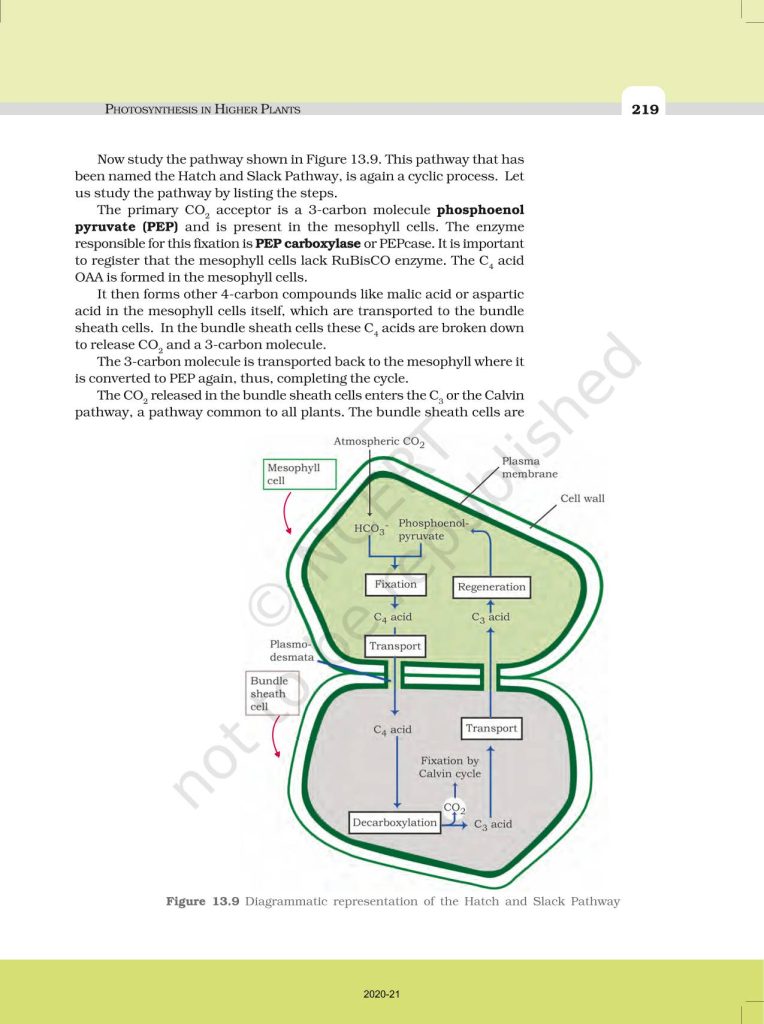
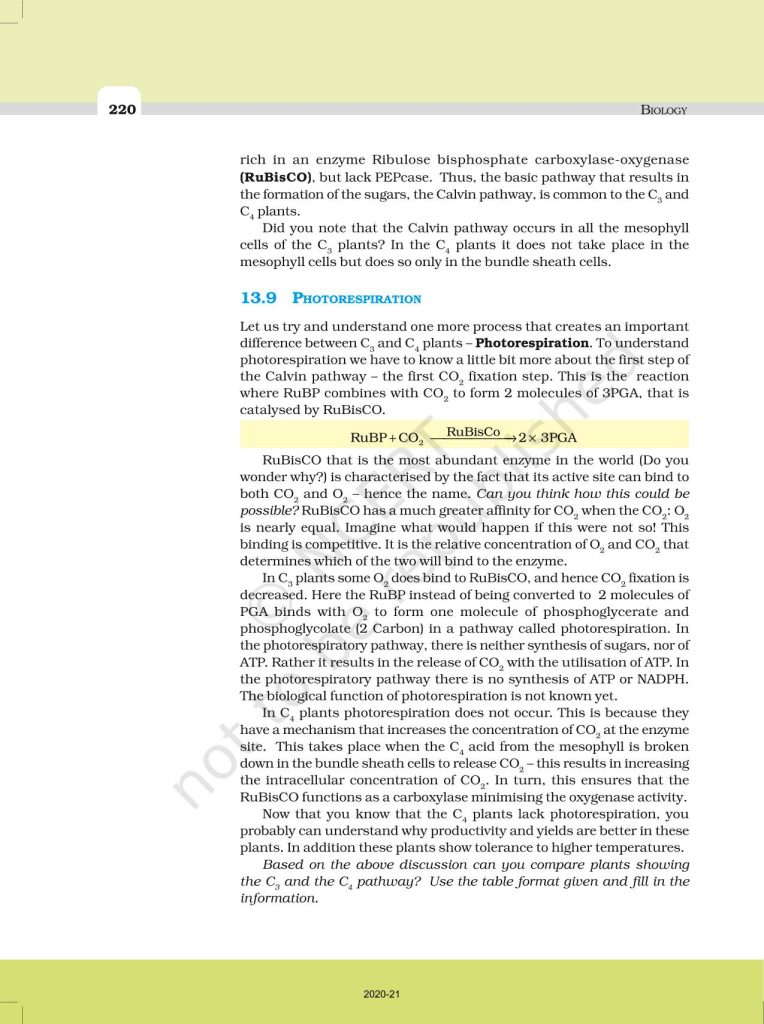
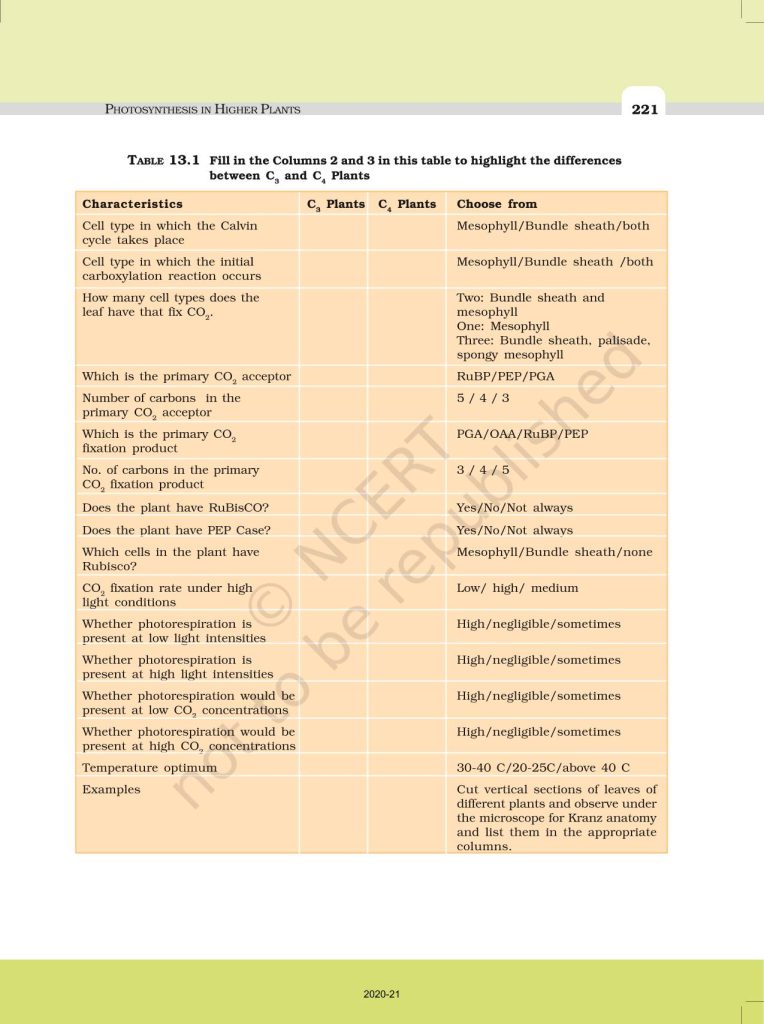
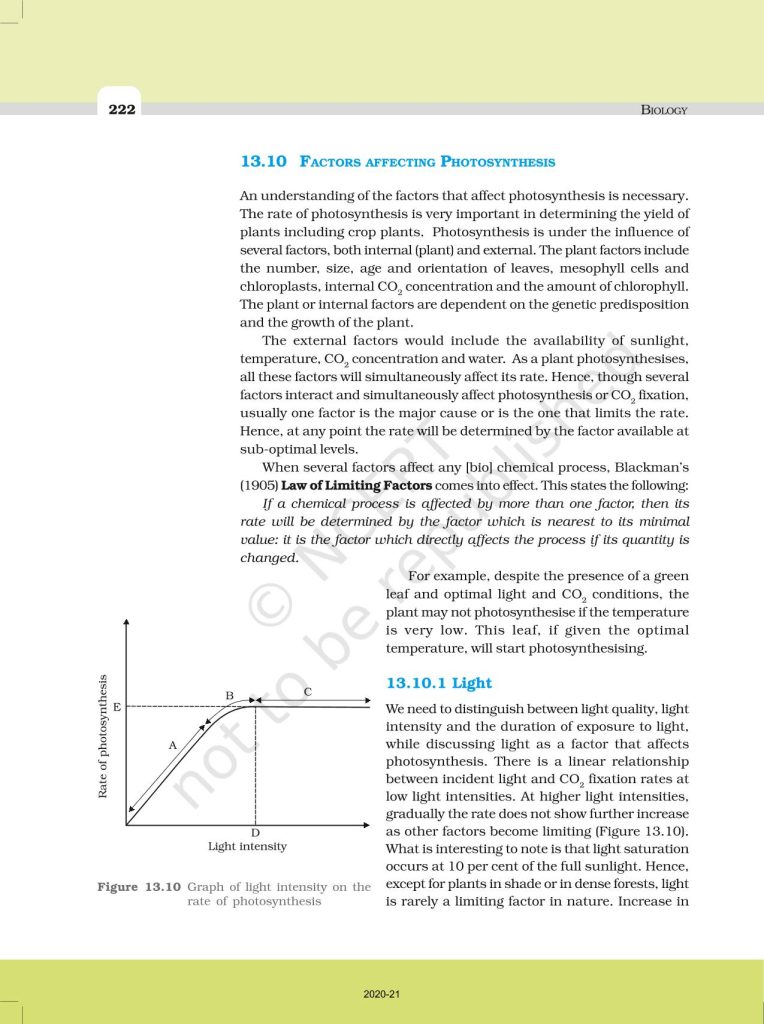
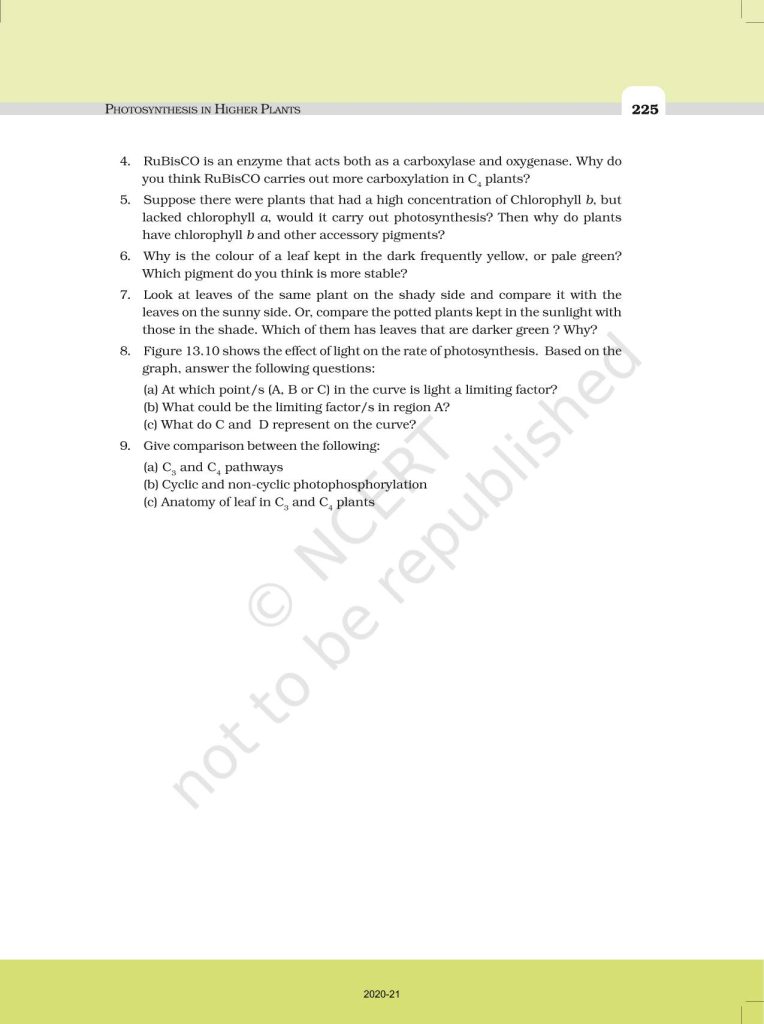
  • It also explains different pathways of carbon fixation including C3, C4, and CAM pathways, along with factors affecting photosynthesis like light intensity, carbon dioxide concentration, and temperature.
💡
High-Yield Topper Tip: Frequently tested in competitive exams. Focus on boundary conditions and conceptual exceptions.

Chapter 13 – Photosynthesis In Higher Plants

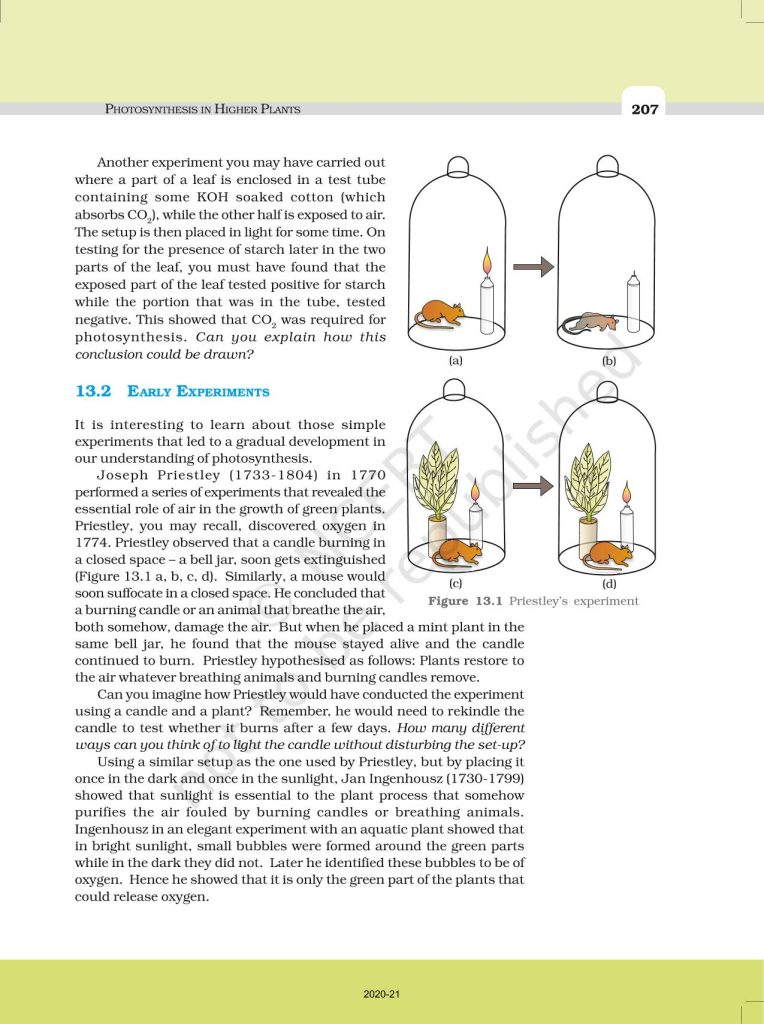
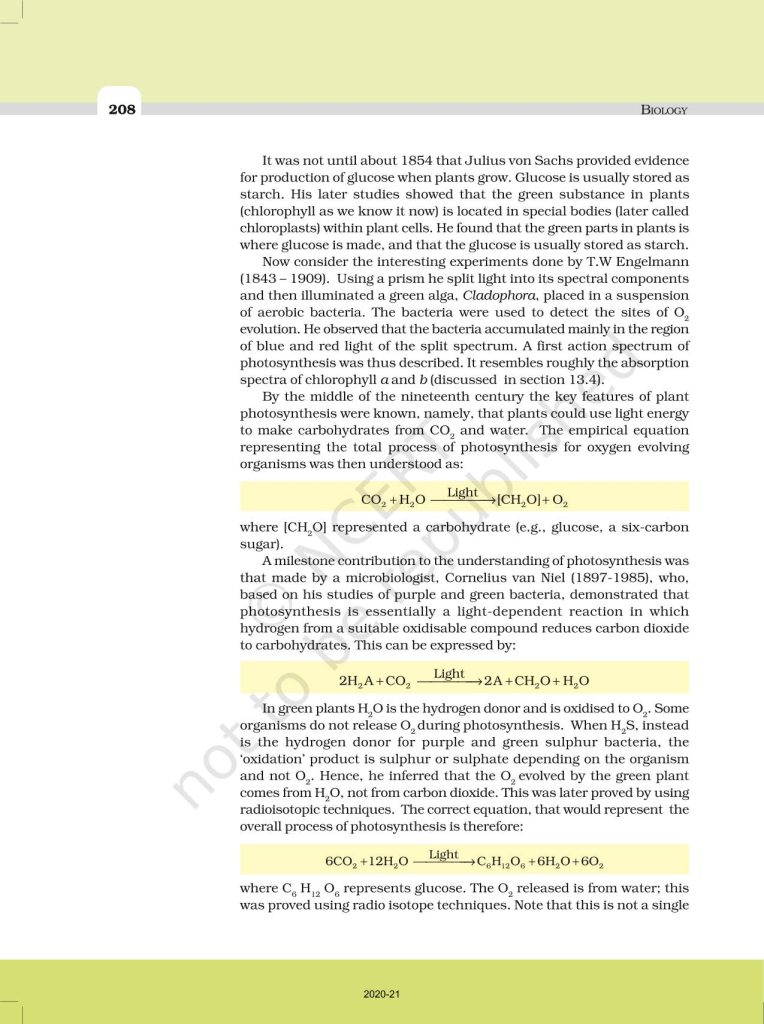
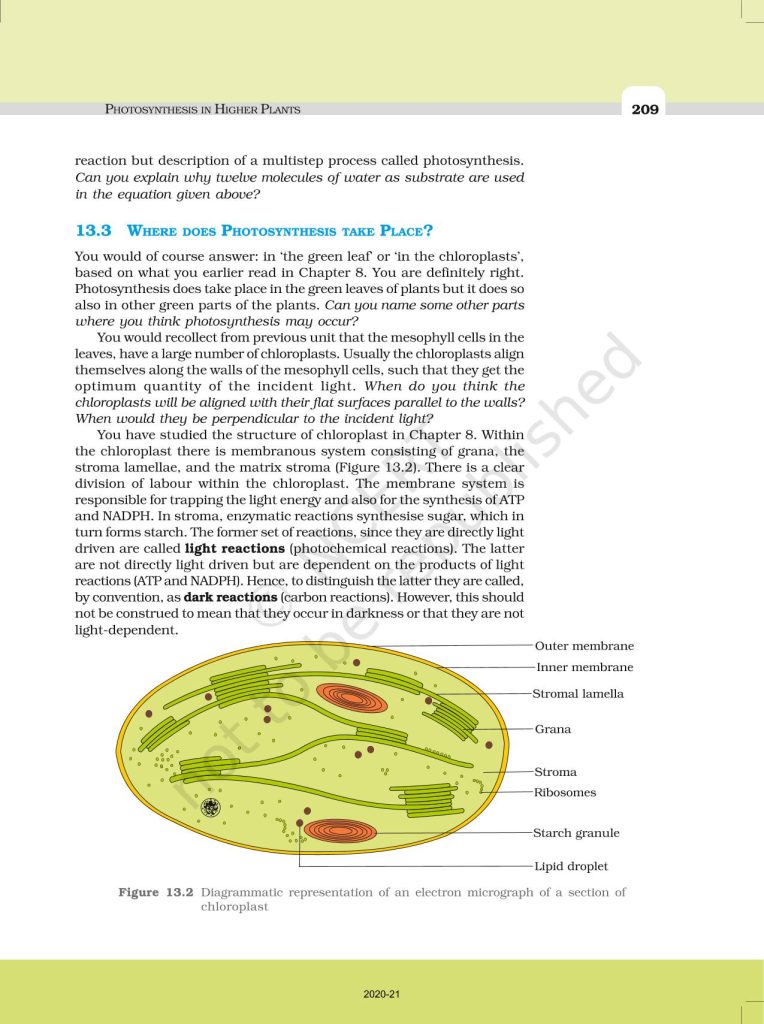
Photosynthesis in Higher Plants is a vital chapter in Class 11 Biology that explains how green plants prepare their own food using sunlight. This process takes place in the chloroplasts, where chlorophyll captures light energy to convert carbon dioxide and water into glucose and oxygen.

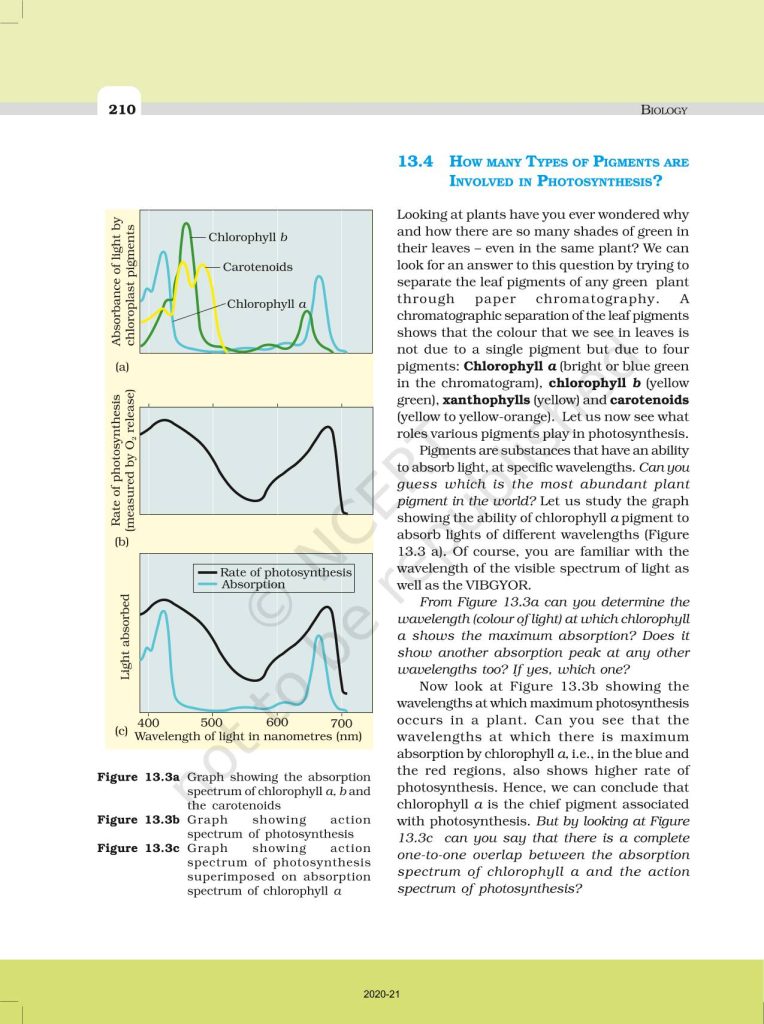
The chapter covers important topics such as light reaction and dark reaction (Calvin cycle), photosystems (PS I and PS II), photophosphorylation, and the role of ATP and NADPH in energy transfer. It also explains different pathways of carbon fixation including C3, C4, and CAM pathways, along with factors affecting photosynthesis like light intensity, carbon dioxide concentration, and temperature.

Understanding this chapter is essential for mastering plant physiology concepts and is highly important for CBSE board exams and competitive exams like NEET.

Photosynthesis in Higher plants NCERT
Student doubts & questions

Stuck on this chapter? Ask below and get help from tutors and fellow students.

Ask a Doubt or Leave Feedback

Your email address will not be published. Required fields are marked *